Q4 2026 Market Outlook: Navigating US Economic Volatility

Anúncios
As we approach the final quarter of 2026, investors are keenly eyeing the horizon for signals that could dictate the trajectory of the US economy. The Q4 2026 market outlook presents a complex picture, characterized by both enduring strengths and emerging vulnerabilities. Understanding these dynamics is paramount for preparing your portfolio for potential volatility and ensuring long-term financial resilience. This comprehensive guide will delve into the key economic indicators, potential risks, and strategic approaches to navigate the anticipated landscape of Q4 2026.
The US economy has demonstrated remarkable adaptability in recent years, but the confluence of evolving monetary policies, geopolitical shifts, and technological advancements could introduce significant turbulence. For investors, the mantra remains clear: preparation is not just prudent, but essential. Our focus on the Q4 2026 market outlook aims to equip you with the knowledge to make informed decisions and transform potential challenges into opportunities.
Anúncios
Understanding the Macroeconomic Landscape for Q4 2026 Market Outlook
To accurately assess the Q4 2026 market outlook, we must first dissect the prevailing macroeconomic environment. Several critical factors will likely shape market sentiment and performance.
Inflationary Pressures and Monetary Policy
Inflation has been a persistent theme, and while central banks have taken aggressive measures, its trajectory remains a key determinant. By Q4 2026, we anticipate a more normalized inflation rate, though the path to that normalization might still be uneven. The Federal Reserve’s stance on interest rates will be crucial. Will they maintain a restrictive stance, or will economic data prompt a pivot towards more accommodative policies? This decision will have profound implications for borrowing costs, corporate earnings, and ultimately, equity valuations. A higher-for-longer interest rate environment could continue to pressure growth stocks and sectors reliant on cheap capital, while value stocks and dividend payers might find renewed favor.
Economic Growth and GDP Projections
Economic growth projections for Q4 2026 are likely to reflect a mature business cycle. While a recession might have been avoided in earlier periods, the risk of a slowdown or even a mild recession cannot be entirely dismissed. Factors such as consumer spending, business investment, and export performance will be under intense scrutiny. A robust labor market could underpin consumer confidence, but any signs of weakening employment could signal broader economic headwinds. The Q4 2026 market outlook will heavily depend on these growth indicators.
Anúncios
Geopolitical Risks and Global Interdependencies
The global geopolitical landscape continues to be a source of uncertainty. Conflicts, trade disputes, and supply chain disruptions in various regions could spill over into the US economy, affecting commodity prices, corporate profitability, and investor sentiment. While the US economy is relatively insulated due to its size and domestic demand, it is not immune to global shocks. Monitoring international developments will be a critical component of any sound investment strategy for the Q4 2026 market outlook.
Key Sectors to Watch in the Q4 2026 Market Outlook
Different sectors of the economy respond uniquely to varying economic conditions. Identifying potential winners and losers will be vital for portfolio positioning.
Technology Sector
The technology sector, particularly areas like artificial intelligence, cybersecurity, and cloud computing, is expected to continue its growth trajectory. However, valuations remain a concern, and a higher interest rate environment could make future earnings less attractive. Investors in tech should focus on companies with strong fundamentals, clear profitability, and sustainable competitive advantages rather than speculative ventures. The Q4 2026 market outlook for tech will be nuanced, rewarding selective investment.
Healthcare and Pharmaceuticals
Healthcare is often considered a defensive sector due to its essential nature. Demographic trends, particularly an aging population, continue to support demand for healthcare services and pharmaceutical products. Innovations in biotechnology and medical technology could also drive growth. This sector could offer stability in a volatile Q4 2026 market outlook.
Energy and Commodities
Energy prices are highly susceptible to geopolitical events and global demand. While the push towards renewable energy continues, traditional energy sources will likely remain crucial for the foreseeable future. Commodity markets, including industrial metals and agricultural products, could experience volatility due to supply chain issues, weather patterns, and global economic activity. These sectors could provide inflation hedges but also carry higher risk.
Financial Services
The financial services sector, including banks, insurance companies, and asset managers, will be significantly impacted by interest rate movements and economic growth. While higher interest rates can boost net interest margins for banks, a slowdown in lending or an increase in defaults could pose challenges. The regulatory environment will also play a role in shaping the sector’s performance in the Q4 2026 market outlook.
Preparing Your Portfolio for Q4 2026 Volatility
Given the potential for increased market volatility in Q4 2026, a proactive and strategic approach to portfolio management is essential. Here are actionable strategies to consider:
Diversification Across Asset Classes
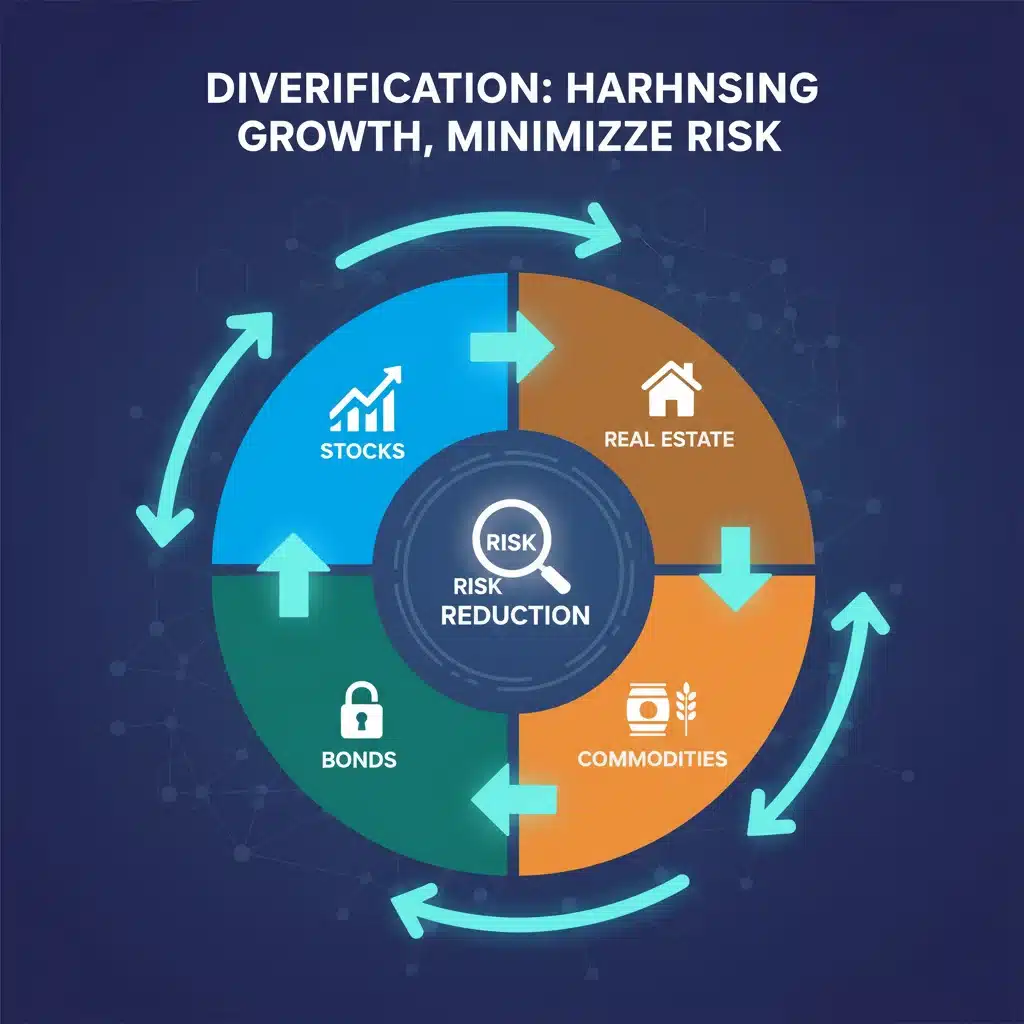
Diversification remains the cornerstone of risk management. Ensure your portfolio is not overly concentrated in any single asset class, sector, or geographic region. Consider a mix of equities, fixed income, real estate, and potentially alternative investments. The goal is to build a portfolio where different assets perform well under varying economic conditions, thus smoothing out overall returns. For the Q4 2026 market outlook, broad diversification can help cushion against unexpected shocks.
Rebalancing Your Portfolio
Regularly rebalancing your portfolio ensures that your asset allocation aligns with your risk tolerance and long-term financial goals. During periods of volatility, some assets may outperform, leading to an overweighting in certain areas. Rebalancing involves selling off some of the outperforming assets and reinvesting in underperforming ones, bringing your portfolio back to its target allocation. This systematic approach can help you buy low and sell high, a fundamental principle of successful investing, particularly in a potentially volatile Q4 2026 market outlook.

Focus on Quality and Fundamentals
In uncertain times, quality matters more than ever. Focus on companies with strong balance sheets, consistent earnings growth, robust cash flows, and sustainable competitive advantages. These companies are generally better positioned to weather economic downturns and maintain profitability. Avoid speculative investments that lack fundamental support, as these tend to be hit hardest during market corrections. A focus on strong fundamentals is a key component of navigating the Q4 2026 market outlook.
Consider Defensive Sectors and Dividend Stocks
Defensive sectors, such as utilities, consumer staples, and healthcare, tend to be less sensitive to economic cycles. Their products and services are in constant demand, regardless of the economic climate, making them more stable investments during periods of volatility. Additionally, dividend-paying stocks from financially sound companies can provide a steady stream of income, which can be particularly attractive when capital appreciation is uncertain. These can be valuable additions to a portfolio preparing for the Q4 2026 market outlook.
Maintain Adequate Liquidity
Ensure you have sufficient cash reserves or highly liquid investments to cover unexpected expenses or to take advantage of investment opportunities that may arise during market downturns. Avoiding the need to sell assets at a loss to meet short-term obligations is crucial. Liquidity provides flexibility and peace of mind, especially in a volatile Q4 2026 market outlook.
Risk Management Strategies
Beyond diversification, implement specific risk management strategies. This could include setting stop-loss orders for individual stocks, using options to hedge against downside risk, or investing in inverse ETFs (with caution and a clear understanding of their mechanics) if you anticipate a significant market correction. However, for most long-term investors, simply having a well-diversified portfolio and a long-term perspective is often the most effective risk management strategy.
Potential Opportunities in the Q4 2026 Market Outlook
While volatility often brings challenges, it also creates opportunities for discerning investors. The Q4 2026 market outlook is no exception.
Value Investing Opportunities
Market corrections can lead to temporary undervaluation of fundamentally strong companies. For value investors, this presents an opportunity to acquire quality assets at discounted prices. Identifying these opportunities requires thorough research and a disciplined approach, but the rewards can be substantial over the long term. Keeping an eye on companies that are temporarily out of favor but have solid underlying businesses can pay dividends in the long run.
Emerging Technologies and Innovation
Even in a slowing economy, innovation continues. Areas like artificial intelligence, renewable energy technologies, biotechnology, and advanced manufacturing are likely to see continued investment and growth. Identifying companies at the forefront of these emerging trends, especially those with strong intellectual property and market adoption, could offer significant growth potential for the Q4 2026 market outlook and beyond.
Global Market Diversification
While our focus is on the US economy, exploring international markets can offer additional diversification benefits. Different economies are often in different stages of their business cycles, and some international markets might offer more attractive growth prospects or valuations than the US during Q4 2026. However, this also introduces currency risk and geopolitical considerations, so careful research is essential.
The Role of Investor Psychology in Q4 2026 Volatility
Beyond economic indicators and market strategies, investor psychology plays a crucial role, especially during volatile periods. Fear and greed can lead to irrational decisions that undermine even the best-laid plans.
Avoiding Emotional Decisions
When markets are turbulent, it’s easy to get caught up in the hype or panic. Emotional selling during downturns or chasing hot stocks during upward surges often leads to suboptimal outcomes. Stick to your investment plan, which should be based on your financial goals, risk tolerance, and time horizon. The Q4 2026 market outlook requires a steady hand and a disciplined mind.
Long-Term Perspective
For most investors, especially those saving for retirement or other long-term goals, a short-term focus on market fluctuations can be detrimental. Historical data consistently shows that markets tend to recover from downturns over time. Maintaining a long-term perspective allows you to ride out periods of volatility and benefit from the compounding power of returns. Remind yourself of your long-term objectives when facing the short-term noise of the Q4 2026 market outlook.
Seeking Professional Guidance
If you find yourself overwhelmed by market complexity or uncertainty, consulting with a qualified financial advisor can be invaluable. A professional can help you assess your current financial situation, define your goals, develop a personalized investment strategy, and provide objective guidance during volatile times. They can also help you understand the nuances of the Q4 2026 market outlook in relation to your specific circumstances.
Conclusion: Navigating the Q4 2026 Market Outlook with Confidence
The Q4 2026 market outlook for the US economy is poised to be a period demanding vigilance, adaptability, and strategic foresight from investors. While potential volatility stemming from evolving monetary policies, inflation dynamics, and geopolitical events is a distinct possibility, it also presents opportunities for those who are well-prepared.
By understanding the macroeconomic landscape, identifying key sector trends, and implementing robust portfolio management strategies such as diversification, regular rebalancing, and a focus on quality, investors can position themselves to navigate the challenges effectively. Maintaining a long-term perspective and avoiding emotional reactions are equally vital for success. Whether through strategic asset allocation or seeking expert advice, the goal is to build a resilient portfolio that can not only withstand potential turbulence but also capitalize on the opportunities that arise.
As Q4 2026 approaches, continuous monitoring of economic data and market developments will be crucial. Stay informed, stay disciplined, and stay focused on your long-term financial objectives. With a well-thought-out plan, you can approach the Q4 2026 market outlook with confidence, transforming potential headwinds into tailwinds for your investment journey.