Inflation Watch 2026: Expert Analysis on US CPI Trends
Anúncios
Inflation Watch: Expert Analysis on the U.S. Consumer Price Index for the First Half of 2026
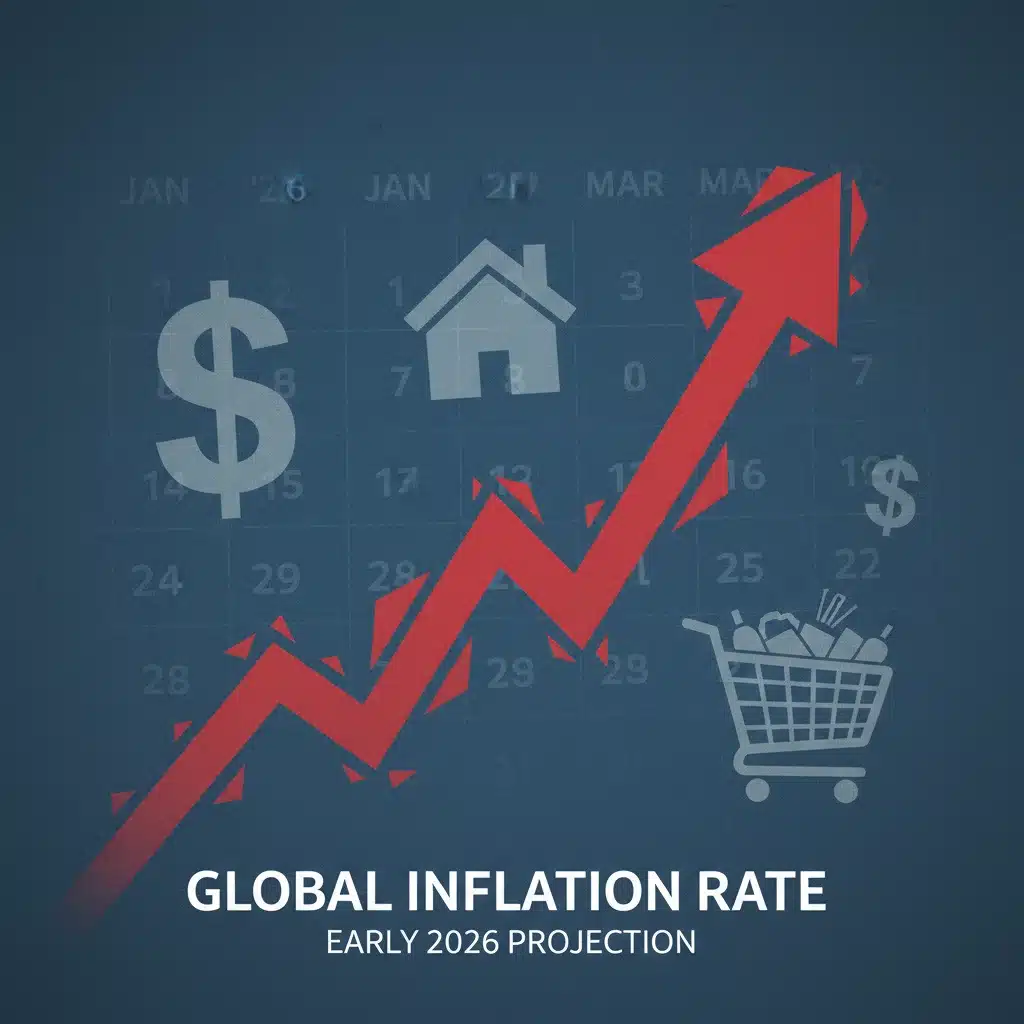
The economic landscape is perpetually shifting, and understanding the nuances of inflation is paramount for businesses, policymakers, and individual consumers alike. As we peer into the first half of 2026, the U.S. Consumer Price Index (CPI) remains a critical barometer for the health and direction of the national economy. This comprehensive analysis will delve into the anticipated trajectory of the US CPI Forecast 2026, dissecting the key drivers, potential challenges, and strategic implications for various sectors.
Anúncios
Inflation, at its core, represents the rate at which the general level of prices for goods and services is rising, and subsequently, purchasing power is falling. The CPI, published monthly by the U.S. Bureau of Labor Statistics, measures the average change over time in the prices paid by urban consumers for a market basket of consumer goods and services. Its movements directly influence everything from interest rates and wage negotiations to investment strategies and household budgets. Therefore, a robust US CPI Forecast 2026 is not just an academic exercise; it’s an essential tool for proactive planning.
The first half of 2026 is expected to be a period of continued adjustment and recalibration for the U.S. economy. While some of the supply chain disruptions that characterized the early 2020s may have eased, new inflationary pressures can always emerge, making the US CPI Forecast 2026 a complex puzzle. Our expert analysis aims to provide clarity amidst this complexity, offering insights into what lies ahead.
Anúncios
Understanding the Current Economic Backdrop Leading into 2026
Before we project forward, it’s crucial to establish the economic context. The years leading up to 2026 have been marked by a unique set of circumstances, including unprecedented fiscal and monetary stimuli, geopolitical tensions, and evolving global trade dynamics. These factors have significantly influenced inflation trends, creating a volatile environment where traditional economic models have sometimes struggled to predict outcomes accurately. The Federal Reserve’s aggressive interest rate hikes in previous periods aimed to tame runaway inflation, and their lingering effects will undoubtedly shape the economic climate in early 2026. The labor market, consumer spending patterns, and global commodity prices will all contribute to the overall inflation picture, making the US CPI Forecast 2026 a multifaceted challenge.
Consumer confidence, though often a lagging indicator, plays a vital role in shaping future demand and, consequently, price levels. If consumers feel secure in their employment and financial future, they are more likely to spend, potentially fueling demand-pull inflation. Conversely, waning confidence can lead to reduced spending and disinflationary pressures. Tracking these sentiment indicators will be integral to refining our US CPI Forecast 2026.
Key Drivers Influencing the US CPI in H1 2026
Several critical factors are anticipated to exert significant influence on the US CPI Forecast 2026 during the first six months of the year. Understanding these drivers is essential for any accurate projection.
Energy Prices: A Persistent Wildcard
Energy prices, particularly for crude oil and natural gas, have historically been a major determinant of inflationary spikes. Geopolitical events, production cuts by OPEC+, and global demand fluctuations can all lead to rapid shifts. While the U.S. has increased its domestic energy production, it remains susceptible to global energy market dynamics. Any significant upward movement in oil prices will quickly translate to higher gasoline prices, increased transportation costs for goods, and subsequently, a broader impact on the CPI. Conversely, a sustained period of lower energy costs could provide a disinflationary tailwind.
Food Prices: Supply Chains and Climate Impacts
Food prices are another highly visible and impactful component of the CPI. Factors such as adverse weather events affecting agricultural yields, global commodity market speculation, and ongoing supply chain efficiencies or bottlenecks will all play a role. Labor costs in the agricultural and food processing sectors also contribute. While some stability might be expected after recent volatility, localized supply issues or unexpected climate events could still lead to significant upward pressure on food prices, directly impacting the US CPI Forecast 2026.
Housing Costs: Rent and Owners’ Equivalent Rent (OER)
Housing costs, encompassing both rent and owners’ equivalent rent (OER), represent the largest single component of the CPI. Changes in these costs tend to lag broader economic trends but have a substantial and persistent impact. Factors influencing housing costs include interest rates (affecting mortgage affordability and thus rental demand), population shifts, construction rates, and zoning regulations. Even if the broader economy cools, a tight housing market can keep inflation elevated in this crucial category, making it a key element in our US CPI Forecast 2026.
Wage Growth and Labor Market Dynamics
The state of the U.S. labor market is a powerful predictor of future inflation. Strong wage growth, particularly if it outpaces productivity gains, can lead to businesses passing on increased labor costs to consumers through higher prices (cost-push inflation). Conversely, a softening labor market might alleviate some of these pressures. The balance between labor demand and supply, union negotiations, and participation rates will all be under intense scrutiny as we formulate the US CPI Forecast 2026. A tight labor market, characterized by low unemployment and high job openings, generally supports stronger wage growth, which can be inflationary.
Global Supply Chains and Geopolitical Risks
While some supply chain issues have resolved, the global economy remains interconnected and vulnerable to disruptions. Geopolitical tensions, trade disputes, and regional conflicts can all lead to bottlenecks, increased shipping costs, and commodity price volatility. Furthermore, the trend towards ‘friend-shoring’ or ‘reshoring’ production could, in some instances, lead to higher domestic production costs, which might be passed on to consumers. Monitoring these global dynamics is crucial for an accurate US CPI Forecast 2026.
The Role of Monetary and Fiscal Policy in 2026
The Federal Reserve’s monetary policy decisions will continue to be a dominant force shaping the US CPI Forecast 2026. Having aggressively raised interest rates in previous periods to combat inflation, the Fed will likely be in a data-dependent mode. Their decisions on whether to maintain, raise, or cut interest rates will hinge on incoming economic data, including inflation figures, employment reports, and GDP growth. A premature easing of policy could reignite inflationary pressures, while an overly restrictive stance could tip the economy into a recession. The Fed’s dual mandate of maximum employment and price stability will guide their actions.

Fiscal policy, enacted by Congress and the Executive branch, also plays a significant role. Government spending programs, tax policies, and deficit levels can all influence aggregate demand and, consequently, inflation. While major new fiscal stimulus packages might be less likely in early 2026 compared to prior years, the ongoing impact of existing legislation and any new targeted spending will need to be factored into the US CPI Forecast 2026.
Sector-Specific Impacts of the US CPI Forecast 2026
The implications of the US CPI Forecast 2026 will not be uniform across all sectors of the economy. Some industries are inherently more sensitive to inflationary pressures than others.
Retail and Consumer Goods
The retail sector is on the front lines of inflation. Higher input costs for manufacturers and distributors will likely be passed on to consumers, impacting purchasing decisions. Retailers will need to carefully manage inventory, pricing strategies, and promotional activities to remain competitive. Consumers, in turn, may shift spending towards essential goods or seek out value brands, influencing sales volumes and profit margins. Understanding these shifts is crucial for any business operating in this space.
Financial Services
Financial institutions are directly affected by interest rate changes, which are often a response to inflation. Higher rates can increase borrowing costs for consumers and businesses, potentially slowing loan growth. However, they can also boost net interest margins for banks. Investment firms will need to advise clients on strategies to protect portfolios from inflation’s erosive effects, such as investing in inflation-protected securities or real assets. The US CPI Forecast 2026 will be a central data point for their strategic planning.
Real Estate and Construction
The real estate and construction sectors are highly sensitive to both interest rates and material costs. Higher mortgage rates can cool housing demand, while elevated prices for building materials can squeeze profit margins for developers. The availability of skilled labor and wage growth in construction will also be key factors. Understanding the housing component of the CPI is particularly vital for these industries.
Technology and Innovation
While often seen as less susceptible to traditional inflation, the technology sector can still be impacted by rising labor costs (especially for highly skilled talent) and increased costs for components. However, technological advancements can also be disinflationary by improving efficiency and reducing production costs. The US CPI Forecast 2026 will help tech companies calibrate their pricing models and investment in R&D.
Potential Scenarios for the US CPI in H1 2026
Given the inherent uncertainties, it’s useful to consider a range of potential scenarios for the US CPI Forecast 2026:
Scenario 1: Controlled Disinflation
In this optimistic scenario, the Federal Reserve’s past actions successfully bring inflation down towards its target range without triggering a severe recession. Supply chains remain stable, energy prices moderate, and wage growth aligns more closely with productivity gains. The CPI gradually declines to a more manageable level, allowing for potential interest rate cuts later in the year, supporting a soft landing for the economy.
Scenario 2: Persistent High Inflation
This scenario envisions inflation remaining stubbornly high, perhaps due to renewed energy price spikes, persistent wage-price spirals, or unforeseen global disruptions. In this case, the Federal Reserve might be forced to maintain higher interest rates for longer, or even implement further hikes, increasing the risk of an economic downturn. This would pose significant challenges for businesses and consumers, requiring careful financial planning.
Scenario 3: Stagflationary Pressures
The most challenging scenario would involve a combination of high inflation and stagnant economic growth (stagflation). This could arise if supply-side shocks constrain production while demand remains somewhat elevated, or if overly aggressive monetary policy leads to a significant slowdown without fully taming prices. This scenario would present difficult choices for policymakers and could lead to prolonged economic hardship.
Strategies for Businesses and Consumers in an Evolving Inflationary Environment
Navigating the complexities of the US CPI Forecast 2026 requires proactive strategies from both businesses and consumers.
For Businesses:
- Optimize Supply Chains: Diversify suppliers, explore near-shoring options, and invest in robust inventory management systems to mitigate future disruptions and cost increases.
- Dynamic Pricing Strategies: Implement flexible pricing models that can adapt to changing input costs and market demand.
- Focus on Productivity: Invest in technology and training to enhance efficiency and productivity, offsetting rising labor costs without necessarily increasing prices.
- Cost Management: Continuously review operational expenses, identify areas for cost reduction, and negotiate favorable terms with suppliers.
- Hedging Strategies: For businesses heavily reliant on specific commodities (e.g., energy, agricultural products), consider hedging strategies to lock in prices and reduce volatility.
For Consumers:
- Budgeting and Savings: Create and stick to a detailed budget. Prioritize saving, especially in high-yield accounts, to help combat the erosion of purchasing power.
- Debt Management: Prioritize paying down high-interest debt, particularly variable-rate debt, as interest rates may remain elevated.
- Investment Adjustments: Review investment portfolios. Consider assets that traditionally perform well during inflationary periods, such as real estate, commodities, or inflation-protected securities (TIPS). Consult with a financial advisor.
- Wise Spending: Be a discerning consumer. Shop around for the best deals, buy in bulk when practical, and consider delaying non-essential purchases.
- Skill Development: Invest in skills that are in high demand to enhance earning potential and career stability, which can help offset rising costs of living.
Conclusion: A Prudent Approach to the US CPI Forecast 2026
The US CPI Forecast 2026 for the first half of the year points to an economic environment that will demand vigilance and adaptability. While the hope is for continued disinflation towards the Federal Reserve’s target, significant uncertainties remain, particularly concerning energy prices, global supply chains, and the persistence of wage growth. Policymakers will face delicate balancing acts, and their decisions will profoundly shape the economic trajectory.
For businesses, a proactive approach to cost management, supply chain resilience, and dynamic pricing will be crucial. For consumers, prudent budgeting, strategic saving, and thoughtful investment decisions will be key to navigating the inflationary landscape. By staying informed about the latest economic data and expert analyses, both businesses and individuals can better prepare for the challenges and opportunities that the first half of 2026 will undoubtedly bring. The journey towards stable prices is ongoing, and understanding the US CPI Forecast 2026 is your first step in staying ahead of the curve.
As we move through the early months of 2026, continuous monitoring of economic indicators, particularly the monthly CPI reports, will be essential. Adaptability and informed decision-making will be the hallmarks of success in this dynamic economic period. The insights provided here serve as a foundational guide, but the real-time data will always offer the most current picture.