Mastering Standardized Tests 2026: A US Student’s Guide to 90th Percentile Scores

Anúncios
In the competitive landscape of U.S. college admissions, standardized tests like the SAT and ACT continue to play a pivotal role for many institutions. While some universities have adopted test-optional policies, a strong score—particularly one in the 90th percentile or above—can significantly enhance an applicant’s profile, demonstrating academic readiness and potential. For students aiming to enter college in 2026 and beyond, understanding how to achieve such a score is paramount. This comprehensive guide will delve into the strategies, resources, and mindset necessary for **standardized test mastery**.
Anúncios
The journey to a top score is not merely about intelligence; it’s about strategic preparation, consistent effort, and understanding the nuances of these exams. This article is designed to be your ultimate roadmap, breaking down complex preparation into actionable steps, ensuring you are well-equipped to tackle the challenges and emerge victorious. We’ll explore everything from foundational knowledge to advanced test-taking techniques, all geared towards helping you achieve that coveted 90th percentile.
Understanding the Landscape: SAT vs. ACT in 2026
Before embarking on your preparation journey, it’s crucial to understand the fundamental differences between the SAT and ACT. While both are designed to assess college readiness, they do so with distinct approaches. Knowing which test aligns better with your strengths can be your first step towards **standardized test mastery**.
Anúncios
The SAT: A Deeper Dive into Reasoning
The SAT, historically known for its emphasis on reasoning and critical thinking, has undergone significant changes in recent years, notably its transition to a digital format. For 2026, students will encounter the digital SAT, which is adaptive, shorter, and features different question types. The digital SAT focuses on two main sections: Reading and Writing, and Math. The Reading and Writing section assesses your ability to comprehend complex texts, analyze arguments, and revise and edit passages. The Math section covers algebra, problem-solving and data analysis, and advanced math, with a greater emphasis on conceptual understanding rather than rote memorization.
- Reading and Writing: This section presents shorter passages, often paired with questions that require direct evidence from the text or an understanding of rhetorical choices. Vocabulary is tested in context, and grammar rules are assessed in a more integrated manner.
- Math: The digital SAT allows calculators for the entire Math section, which can be a game-changer for many students. Questions are often framed in real-world scenarios, demanding not just computation but also interpretation and problem-solving skills.
- Adaptive Testing: The digital SAT is section-adaptive. This means your performance on the first module of a section determines the difficulty of the second module in that same section. This adaptive nature means every question counts, and consistency is key.
The ACT: A Broader Look at Subject-Matter Knowledge
The ACT, on the other hand, is often described as more straightforward, testing a broader range of high school curriculum knowledge. It consists of four main sections: English, Math, Reading, and Science, with an optional Writing (essay) section. The ACT has largely maintained its paper-and-pencil format, though digital options are available in some testing centers.
- English: This section evaluates your understanding of grammar, punctuation, sentence structure, and rhetorical skills. It’s fast-paced, requiring quick identification of errors and effective revisions.
- Math: The ACT Math section covers a wider range of topics, including pre-algebra, elementary algebra, intermediate algebra, coordinate geometry, plane geometry, and trigonometry. While calculators are permitted, the emphasis is on applying learned formulas and concepts efficiently.
- Reading: Similar to the SAT, the ACT Reading section assesses comprehension, but typically features longer, more traditional passages. The questions are generally more direct, asking about explicit information or author’s purpose.
- Science: Unique to the ACT, this section measures your scientific reasoning skills, interpretation of data, and analysis of experimental results. It’s not about recalling specific scientific facts but rather about critically evaluating scientific information presented in various formats.
Choosing between the two often comes down to personal preference. If you excel at critical reading, abstract reasoning, and problem-solving with less emphasis on time pressure per question, the digital SAT might be your fit. If you prefer a test that aligns more closely with your high school coursework, are comfortable with a faster pace, and enjoy data interpretation, the ACT could be more suitable. Taking a full-length diagnostic test for both exams early in your junior year is highly recommended to determine your strengths and weaknesses.
Phase 1: Building a Solid Foundation (Junior Year – Early Summer)
Achieving **standardized test mastery** requires more than last-minute cramming. It begins with a strong foundation, built over time. This initial phase focuses on understanding the test structure, content, and identifying your baseline.
Step 1: Diagnostic Testing and Goal Setting
Your first step should be to take a full-length, timed diagnostic test for both the SAT and ACT. Treat these as real exams to get an accurate baseline score. Many test preparation companies and official College Board/ACT websites offer free practice tests. Analyze your results meticulously:
- Identify Weaknesses: Which sections or question types did you struggle with the most? Was it specific math concepts, reading comprehension, or grammar rules?
- Time Management: Did you run out of time on any section? This indicates a need to improve pacing.
- Error Analysis: Categorize your mistakes. Were they careless errors, conceptual misunderstandings, or misinterpretations of the question?
Based on your baseline scores and your target colleges’ average scores, set a realistic yet ambitious goal. A 90th percentile score on the SAT typically falls around 1400-1450 (out of 1600), and on the ACT, it’s usually around 30-32 (out of 36). Research the average scores of admitted students at your desired universities to define a precise target.
Step 2: Content Review and Skill Development
Once you’ve identified your weak areas, dedicate time to reviewing the core content. This isn’t about memorizing; it’s about understanding concepts. For example, if algebraic equations were a struggle, revisit those chapters in your math textbook or use online resources. If reading comprehension was an issue, practice active reading techniques with challenging articles and literary excerpts.
- Math: Utilize Khan Academy, dedicated test prep books (e.g., College Panda for SAT Math, Barron’s for ACT Math), and your high school curriculum. Focus on understanding the underlying principles.
- Reading: Practice reading diverse texts—scientific articles, historical documents, literary fiction—and actively summarize paragraphs, identify main ideas, and infer meaning. Websites like The Atlantic or The New Yorker offer excellent material for practice.
- Writing/English: Review grammar rules (punctuation, subject-verb agreement, pronoun usage) and rhetorical strategies. Online grammar guides and specific sections in test prep books are invaluable.
- Science (ACT): Practice interpreting graphs, tables, and experimental setups. Focus on identifying relationships between variables and drawing logical conclusions.
Step 3: Building a Study Schedule
Consistency is key to **standardized test mastery**. Create a realistic study schedule that you can stick to. Aim for 3-5 hours of dedicated study per week during this phase, broken into manageable chunks (e.g., 1-hour sessions). Use a planner or a digital calendar to block out study times and stick to them as if they were mandatory appointments.
- Vary Your Study: Don’t just drill one subject. Rotate between your weak areas and areas where you need to maintain proficiency.
- Active Learning: Avoid passive reading. Engage with the material by solving practice problems, explaining concepts aloud, or teaching them to a peer.
- Short, Frequent Sessions: Our brains learn better in shorter, more frequent bursts. Instead of one long 3-hour session, try three 1-hour sessions spread throughout the week.
Phase 2: Strategic Practice and Refinement (Summer Before Senior Year)
With a solid foundation in place, this phase shifts focus to strategic practice, honing test-taking skills, and integrating full-length practice tests. This is where you begin to truly master the exam format and pacing.
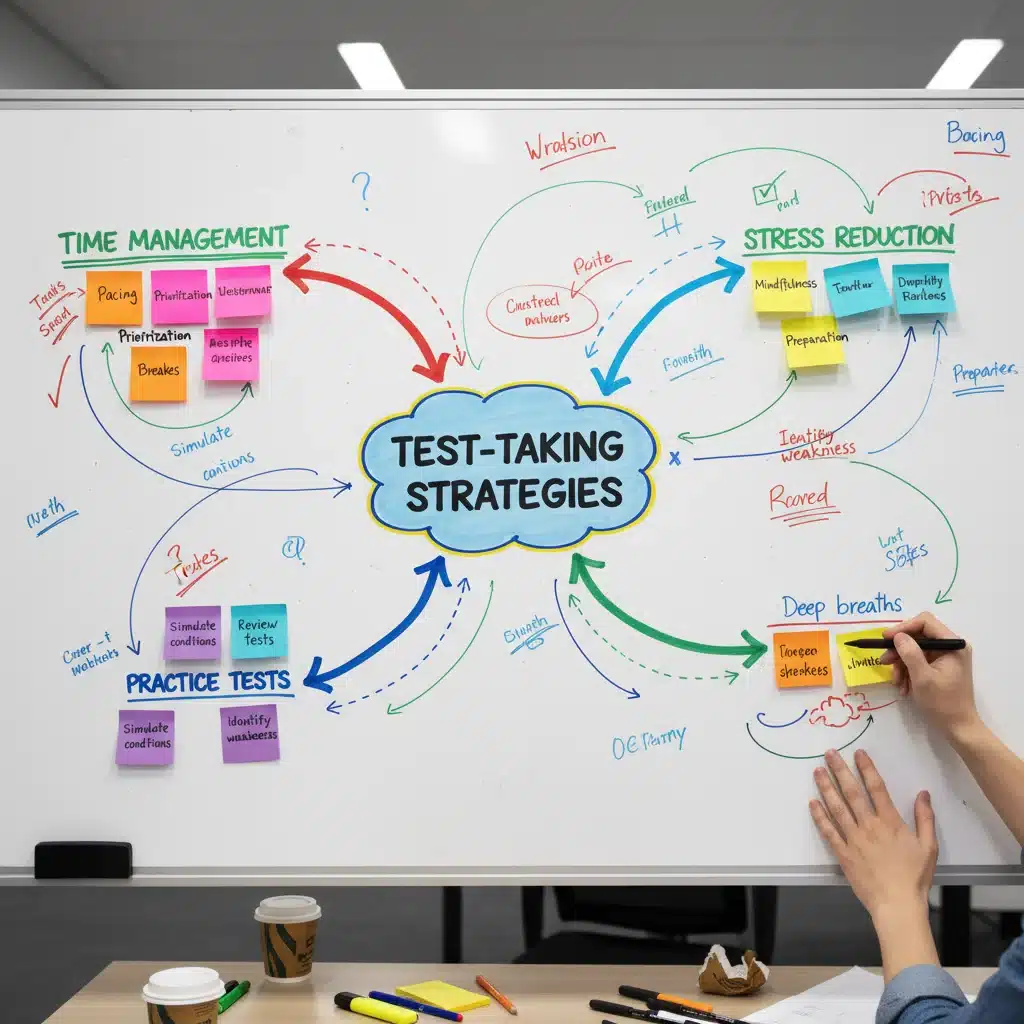
Step 4: Mastering Test-Taking Strategies
Knowing the content is one thing; applying it effectively under timed pressure is another. Develop and practice specific strategies for each section.
- Pacing: Understand how much time you have per question and practice sticking to it. For the ACT, this is particularly crucial due to its faster pace.
- Process of Elimination: Learn to effectively eliminate incorrect answer choices, even if you’re unsure of the correct one. This significantly increases your odds.
- Question Attack Strategies: For reading passages, decide whether to read the questions first or the passage first. For math, learn to identify ‘trap’ answers and common pitfalls.
- Skipping and Returning: Don’t get stuck on a single difficult question. Mark it, move on, and return if time permits. Every question is worth the same points.
- Bubble Sheet Management (for paper tests): Practice transferring answers accurately and efficiently if taking the paper ACT.
Step 5: Regular Full-Length Practice Tests
During this phase, aim to take one full-length practice test (either SAT or ACT, depending on your focus) every 2-3 weeks. These practice tests are invaluable for several reasons:
- Simulate Test Day: Take them under strict timed conditions, ideally in a quiet environment similar to a testing center.
- Build Stamina: These exams are long and mentally taxing. Regular practice builds the stamina needed to maintain focus throughout.
- Identify Remaining Weaknesses: Each practice test will reveal areas where you still need improvement, allowing you to fine-tune your study plan.
- Track Progress: Monitor your scores to see if your strategies are working and if you’re moving closer to your 90th percentile goal.
After each practice test, conduct a thorough review. Don’t just look at the score; understand *why* you got questions wrong. Was it a content gap? A misreading of the question? A pacing issue? This detailed error analysis is crucial for transforming mistakes into learning opportunities.
Step 6: Utilizing Official Resources
The College Board (for SAT) and ACT, Inc. (for ACT) provide the most authentic practice materials. Use their official guides and online resources extensively. Khan Academy, in partnership with the College Board, offers free, personalized SAT practice that adapts to your performance. The ACT website also provides free practice tests and study materials. These official resources are your best bet for understanding the test creators’ intentions and question styles.
Phase 3: Peak Performance and Test Day Readiness (Senior Year – Fall)
As test day approaches, this phase focuses on solidifying your knowledge, managing stress, and ensuring you are in optimal condition to perform. This is the final push for **standardized test mastery**.
Step 7: Targeted Review and Shoring Up Weaknesses
Based on your consistent practice test analysis, create a highly targeted review plan. Instead of broad content review, focus intensely on the specific concepts or question types that continue to challenge you. Use flashcards for vocabulary or formulas, drill specific math problem sets, or re-read challenging passages.
- Seek Expert Help: If you’re consistently struggling with a particular area, consider working with a tutor for a few sessions. A good tutor can often unlock understanding where self-study has stalled.
- Collaborate with Peers: Form a study group with motivated friends. Explaining concepts to others can solidify your own understanding, and different perspectives can illuminate difficult problems.

Step 8: Managing Stress and Anxiety
Test anxiety can significantly impede performance. Developing strategies to manage stress is as important as content preparation. Recognize that a certain level of anxiety is normal and can even be motivating, but excessive stress is detrimental.
- Mindfulness and Relaxation Techniques: Practice deep breathing exercises, meditation, or progressive muscle relaxation. These can be used during study sessions and on test day.
- Positive Visualization: Imagine yourself performing well on the test and achieving your target score.
- Physical Activity: Regular exercise is a proven stress reducer. Ensure you maintain a healthy balance between studying and physical activity.
- Adequate Sleep: Prioritize 7-9 hours of sleep, especially in the week leading up to the exam. A well-rested brain performs optimally.
- Healthy Diet: Fuel your body and brain with nutritious food. Avoid excessive sugar and caffeine, which can lead to energy crashes.
Step 9: The Week Before the Test
The week before the exam is not the time for intense cramming. Instead, focus on light review and consolidating what you’ve learned.
- Light Review: Skim through notes, review flashcards, and do a few easy practice problems to keep your brain engaged.
- No New Material: Avoid trying to learn entirely new concepts. This can lead to increased anxiety and confusion.
- Logistics: Confirm your testing location, time, and what you need to bring (photo ID, admission ticket, approved calculator, pencils). Plan your route to the test center.
- Relax: Engage in enjoyable, relaxing activities. Watch a movie, read a non-academic book, or spend time with friends and family.
Step 10: Test Day Execution
All your hard work culminates on test day. Follow these tips to ensure optimal performance:
- Get a Good Night’s Sleep: This cannot be stressed enough. Aim for 8-9 hours.
- Eat a Nutritious Breakfast: Opt for complex carbohydrates and protein to sustain your energy levels. Avoid sugary foods that can lead to a crash.
- Arrive Early: Give yourself plenty of time to get to the test center, find your room, and settle in without rushing.
- Stay Calm: If you feel anxiety creeping in, use your practiced breathing techniques. Remind yourself of all the preparation you’ve done.
- Read Instructions Carefully: Even if you think you know them, take a moment to read all instructions for each section.
- Manage Your Time: Stick to your pacing strategies. Don’t dwell too long on any single question.
- Utilize Breaks: Use breaks to stretch, use the restroom, and have a small snack and water. Get up and move around to refresh your mind.
- Trust Your Preparation: You’ve put in the work. Trust your instincts and your knowledge.
Advanced Strategies for the 90th Percentile
To move beyond a good score to a truly exceptional one, consider these advanced strategies for **standardized test mastery**:
Deep Dive into Error Patterns
Beyond categorizing mistakes, look for patterns. Do you consistently miss questions involving specific types of data interpretation? Are you falling for a particular kind of distractor in reading comprehension? Identifying these deep-seated patterns allows for hyper-targeted practice and strategy adjustment.
Mastering the Subtleties of Language
For the Reading and Writing/English sections, top scorers often have a nuanced understanding of language. This includes identifying subtle differences in word meaning, recognizing rhetorical devices, and understanding the impact of sentence structure on meaning. Read high-quality, complex prose regularly to develop this intuition.
Strategic Guessing
Both the SAT and ACT do not penalize for incorrect answers (as of their current formats). This means you should *never* leave a question blank. If you’ve narrowed down choices, make an an educated guess. Even random guessing gives you a statistical chance of getting it right.
Understanding the Test Maker’s Perspective
Try to think like the test creators. What are they trying to test with this question? What common mistakes are they trying to trap students into making? This perspective can help you anticipate wrong answer choices and identify the intended correct answer more quickly.
Simulating Adaptive Testing (for Digital SAT)
While difficult to perfectly replicate, you can simulate the adaptive nature of the digital SAT by consciously adjusting your focus after completing a module. If you feel you performed strongly on the first module, anticipate a harder second module and be prepared to slow down slightly and double-check your work. If you struggled, recognize that the second module might be slightly easier, but still maintain focus.
Leveraging Technology for Personalized Practice
Beyond official resources, many online platforms and apps offer adaptive practice questions, detailed analytics, and personalized study plans. Utilize these tools to pinpoint your exact areas of weakness and get tailored practice. Look for platforms that offer detailed explanations for every question, not just the correct answer.
Common Pitfalls to Avoid
Even with the best intentions, students can fall into common traps that hinder their progress towards **standardized test mastery**.
- Procrastination: Waiting until the last minute is a recipe for stress and mediocre scores. Start early and maintain consistency.
- Ignoring Weaknesses: It’s tempting to only practice what you’re good at. Confront your weak areas head-on; that’s where the most significant score gains are made.
- Over-reliance on One Resource: While official materials are paramount, supplementing with reputable test prep books and online platforms can provide diverse practice and explanations.
- Burning Out: Excessive studying without breaks or adequate rest leads to diminishing returns. Balance is crucial.
- Not Taking Full-Length Practice Tests: Skipping full-length simulations leaves you unprepared for the endurance and pacing demands of the actual exam.
- Ignoring Test-Taking Strategies: Knowledge alone isn’t enough; you need effective strategies to apply that knowledge under pressure.
- Comparing Yourself to Others: Everyone’s journey is different. Focus on your own progress and goals, not on what your friends are doing.
The Role of Extracurriculars and GPA
While this guide focuses on **standardized test mastery**, it’s important to remember that these scores are just one component of a holistic college application. A strong GPA, meaningful extracurricular activities, compelling essays, and strong letters of recommendation are equally, if not more, important. Strive for balance in your academic and personal life. An exceptional test score can open doors, but a well-rounded profile is what truly stands out.
Final Thoughts: Your Path to Success
Achieving a 90th percentile score on the SAT or ACT in 2026 is an ambitious but entirely attainable goal for U.S. students. It demands dedication, strategic planning, and a resilient mindset. By understanding the test formats, building a strong foundation, engaging in consistent and targeted practice, and managing stress effectively, you can significantly increase your chances of success. Remember, every point you gain is a testament to your hard work and commitment.
Begin your preparation early, stay disciplined, and leverage all available resources. With a clear vision and a structured approach to **standardized test mastery**, you are well on your way to unlocking your full potential and securing admission to your dream college. Good luck!