Maximize Your 2026 GI Bill & Employer Tuition Assistance

Anúncios
Maximizing Your Educational Benefits: A 2026 Guide to Utilizing GI Bill and Employer Tuition Assistance is crucial for individuals seeking to fund their academic and career development by strategically combining these powerful financial aid options.
Anúncios
Navigating the landscape of educational funding can often feel like a complex maze, especially when numerous opportunities are available. For veterans and employees alike, understanding how to best leverage the GI Bill Employer Assistance programs can be a game-changer. This comprehensive guide for 2026 aims to demystify the process, offering clear, actionable insights to help you maximize your educational benefits and achieve your academic aspirations.
Anúncios
Understanding the GI Bill: Your Foundation for Education in 2026
The GI Bill stands as a cornerstone of educational support for those who have served our nation. Various chapters exist, each with its own criteria and benefits, designed to assist veterans, service members, and their families in pursuing higher education. As we move into 2026, staying informed about the specifics of each chapter and any updated regulations is paramount for effective utilization.
Choosing the right GI Bill chapter is often the first, and most critical, step. The Post-9/11 GI Bill (Chapter 33) is widely recognized for its comprehensive benefits, covering tuition and fees, housing allowances, and stipends for books and supplies. However, other chapters, such as the Montgomery GI Bill (MGIB-AD and MGIB-SR), might be more suitable depending on individual service history and educational goals. It’s essential to thoroughly research each option to determine which best aligns with your unique circumstances.
Key GI Bill Chapters and Their Benefits
- Post-9/11 GI Bill (Chapter 33): Provides up to 36 months of benefits, covering tuition and fees paid directly to the school, a monthly housing allowance, and an annual books and supplies stipend. Eligibility typically requires at least 90 aggregate days of active duty service after September 10, 2001.
- Montgomery GI Bill – Active Duty (MGIB-AD, Chapter 30): Offers up to 36 months of education benefits to eligible veterans and service members who contributed to the program during their service. Benefits are paid directly to the individual, who then pays for their education.
- Montgomery GI Bill – Selected Reserve (MGIB-SR, Chapter 1606): Available to members of the Selected Reserve who meet certain eligibility criteria, providing benefits for various educational programs.
Beyond tuition, the GI Bill also supports various educational pursuits, including vocational training, apprenticeships, and on-the-job training programs. This flexibility allows beneficiaries to tailor their education to their career ambitions, whether that involves a traditional four-year degree or specialized skill development. Understanding the full scope of what the GI Bill can offer is vital to maximizing its potential.
In conclusion, the GI Bill serves as a robust financial foundation for educational endeavors. By carefully assessing the different chapters and their respective benefits, veterans and service members can make informed decisions that best support their academic and professional development in 2026 and beyond.
Employer Tuition Assistance: A Growing Resource for Career Advancement
Beyond government programs, many employers recognize the value of an educated workforce and offer tuition assistance programs. These programs are often designed to support employees’ professional growth, enhance their skills, and ultimately contribute to the company’s success. In 2026, employer tuition assistance continues to be a significant benefit for those looking to advance their careers through education.
Employer tuition assistance can vary widely, from direct tuition reimbursement to partnerships with specific educational institutions offering discounted rates. The key is to understand your employer’s specific policy, which typically outlines eligibility requirements, approved courses or degrees, and the maximum amount of financial support available. Some companies may require employees to remain with the organization for a certain period after completing their education.
Navigating Employer Policies and Benefits
- Eligibility Criteria: Most programs require employees to be full-time, have a minimum tenure with the company, and maintain a satisfactory performance record.
- Approved Programs: Ensure your chosen degree or certification program aligns with your employer’s approved list. Many companies focus on programs relevant to your current role or future career path within the organization.
- Reimbursement Process: Understand if tuition is paid directly to the institution or if you are reimbursed after successfully completing the course with a minimum grade.
Proactive communication with your HR department or direct supervisor is crucial when considering employer tuition assistance. They can provide detailed information about the application process, deadlines, and any specific requirements you need to meet. Early planning ensures that you can align your academic schedule with your work responsibilities and maximize your chances of approval.
Ultimately, employer tuition assistance represents a valuable opportunity to invest in your education without incurring significant personal debt. By thoroughly understanding your company’s policy and planning strategically, you can leverage this benefit to achieve both your academic and professional goals.
Strategic Combination: GI Bill and Employer Benefits Synergy
The true power lies in strategically combining your GI Bill benefits with employer tuition assistance. This synergy can lead to a significantly reduced financial burden for your education, potentially covering most, if not all, of your costs. However, navigating this combination requires careful planning and an understanding of how these two distinct programs interact.
One primary consideration is the order in which you utilize these benefits. In many cases, the GI Bill is considered the primary payer. This means that your educational institution will first bill the Department of Veterans Affairs (VA) for tuition and fees covered by your GI Bill. Once the VA has processed its payment, any remaining balance may then be eligible for employer tuition assistance. It’s crucial to confirm this sequence with both your school’s veteran affairs office and your employer’s HR department.
Maximizing Your Financial Coverage
Consider the following strategies to optimize your combined benefits:
- Understand Payment Hierarchy: Confirm with your school and employer which benefit acts as the primary payer. This often dictates how funds are disbursed and what remaining balance your employer might cover.
- Coordinate Deadlines: Be aware of application deadlines for both your GI Bill and employer assistance programs. Missing a deadline could delay or forfeit funding.
- Factor in Housing and Stipends: Remember that the Post-9/11 GI Bill often provides a monthly housing allowance and a book stipend, which are paid directly to you. These funds can help cover living expenses, allowing your employer’s assistance to focus solely on tuition.
Some employers may have policies regarding how their tuition assistance interacts with other forms of financial aid, including federal benefits like the GI Bill. It is not uncommon for an employer to reduce their contribution if other aid is received. Therefore, transparent communication with all parties involved—the VA, your educational institution, and your employer—is essential to avoid any unexpected financial gaps.
By carefully coordinating the application and disbursement processes for both the GI Bill and employer tuition assistance, you can create a robust financial plan for your education. This strategic approach ensures you are leveraging every available resource to minimize out-of-pocket expenses and focus on your studies.
Navigating the Application Process: Tips for Success
Applying for educational benefits can be a multi-step process, but with careful organization and attention to detail, you can ensure a smooth experience. This section provides practical tips for navigating both the GI Bill and employer tuition assistance application processes in 2026.
For the GI Bill, the first step is usually to apply for benefits through the VA website. This involves gathering necessary documentation, such as your DD-214 (Certificate of Release or Discharge from Active Duty) and details about your selected educational program. Once approved, the VA will issue a Certificate of Eligibility (COE), which you will need to provide to your school’s veteran affairs office. This office acts as a crucial liaison, helping you enroll and ensuring your benefits are properly applied.
Streamlining Your Applications
- Gather Documentation Early: Collect all required documents for both GI Bill and employer assistance well in advance of application deadlines. This includes military service records, academic transcripts, and employer policy documents.
- Utilize School Resources: Your chosen educational institution likely has a dedicated veterans affairs office or financial aid department that can assist with GI Bill applications and provide guidance on employer assistance coordination.
- Maintain Detailed Records: Keep copies of all applications, correspondence, and approvals from the VA, your employer, and your school. This documentation can be invaluable if any discrepancies or questions arise.
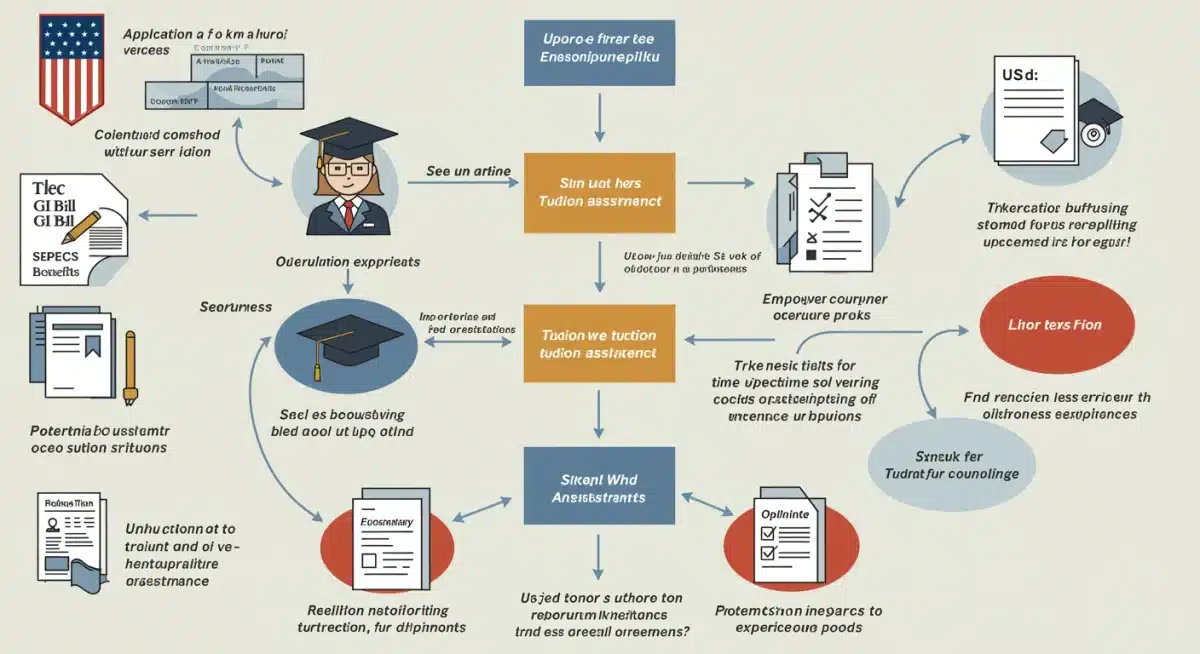
When applying for employer tuition assistance, initiate the process by reviewing your company’s policy thoroughly. Typically, you will need to complete an internal application form, often requiring approval from your supervisor and HR. Be prepared to provide details about your chosen program, its relevance to your career, and expected costs. Timely submission is often critical, as many companies operate on specific cycles for tuition reimbursement.
Successfully navigating the application process for both the GI Bill and employer tuition assistance requires diligence and proactive engagement. By preparing thoroughly, utilizing available support resources, and maintaining meticulous records, you can ensure a smooth path to securing your educational funding.
Choosing the Right Educational Program and Institution
The effectiveness of GI Bill Employer Assistance is significantly amplified when coupled with a thoughtful selection of your educational program and institution. This decision impacts not only the applicability of your benefits but also your long-term career trajectory. In 2026, the array of educational options is vast, making informed choices more crucial than ever.
When selecting a program, consider its accreditation, reputation, and alignment with your career goals. For veterans, ensuring the institution is approved by the VA for GI Bill benefits is non-negotiable. This information is usually available on the VA’s website and through the school’s veteran affairs office. Similarly, for employer assistance, verify that your chosen program falls within your company’s approved list, especially if there are specific fields of study they prioritize for reimbursement.
Factors for Program and Institution Selection
- Accreditation and VA Approval: Confirm that the institution and program are nationally or regionally accredited and approved for GI Bill benefits.
- Employer Alignment: Ensure the program aligns with your employer’s tuition assistance policy, particularly regarding relevant fields of study or skill development.
- Career Relevance: Choose a program that directly supports your current career advancement or a desired career transition. Research potential job outcomes and industry demand.
- Flexibility and Format: Consider whether an online, hybrid, or in-person format best suits your lifestyle and work commitments, especially if you are balancing full-time employment.
Beyond formal degrees, vocational training, certification programs, and apprenticeships can also be excellent uses of combined benefits. These options often provide practical skills that are immediately applicable in the workforce, leading to quicker career progression. Researching the job market for your desired field can help you identify programs that offer the highest return on investment.
Ultimately, choosing the right educational program and institution is a personal journey that should be guided by your aspirations and practical considerations. By diligently researching and aligning your choices with both your GI Bill and employer assistance parameters, you set yourself up for academic success and career growth.
Maximizing Value: Beyond Tuition and Fees
While tuition and fees are often the primary focus of educational benefits, truly maximizing your GI Bill Employer Assistance involves looking beyond these direct costs. Both programs can offer additional avenues for financial relief and career enhancement that, when fully leveraged, provide comprehensive support for your educational journey in 2026.
For GI Bill beneficiaries, the monthly housing allowance (MHA) and books and supplies stipend are significant components that directly impact your overall financial well-being. The MHA helps cover living expenses, freeing up other funds or allowing you to work fewer hours, thus dedicating more time to your studies. The stipend for books and supplies, though smaller, helps offset essential academic costs. Understanding how these are calculated and disbursed is key to budgeting effectively.
Extracting Full Value from Your Benefits
- Living Expenses: Utilize GI Bill housing allowances to cover rent, utilities, and other living costs, allowing employer assistance to focus on academic fees.
- Professional Development: Explore if your employer’s assistance can cover professional certifications, workshops, or conferences that enhance your skills beyond a formal degree.
- Networking Opportunities: Actively participate in veteran student organizations or professional groups at your institution. These provide valuable networking and mentorship opportunities.
Some employer tuition assistance programs may also offer benefits beyond direct tuition reimbursement. This could include covering fees for professional licensure exams, costs associated with specific industry certifications, or even providing paid time off for study leave. It is vital to inquire about all potential ancillary benefits your employer might offer to ensure you are not leaving any money or support on the table.
Furthermore, consider the long-term career advantages gained from utilizing these benefits. An advanced degree or specialized certification can lead to higher earning potential, greater job security, and increased opportunities for promotion. The investment in your education, supported by the GI Bill and employer assistance, is an investment in your future. By looking at the holistic value, beyond just tuition, you can truly maximize the impact of these powerful programs.
| Key Point | Brief Description |
|---|---|
| GI Bill Chapters | Understand specific benefits and eligibility for Post-9/11, Montgomery, and other chapters. |
| Employer Assistance | Review company policies, eligibility, and approved programs for tuition reimbursement. |
| Strategic Combination | Coordinate GI Bill and employer benefits for maximum financial coverage and minimal out-of-pocket costs. |
| Application Process | Gather documents, use school resources, and track all applications and approvals diligently. |
Frequently Asked Questions About Educational Benefits
Yes, in most cases, you can use both, but careful coordination is crucial. The GI Bill typically acts as the primary payer, covering tuition and fees first. Your employer’s assistance can then often cover any remaining balance. Always verify the specific policies with your school’s veteran office and your employer’s HR department to ensure seamless integration and avoid issues.
The Post-9/11 GI Bill (Chapter 33) pays tuition directly to the school, provides a monthly housing allowance, and a books/supplies stipend. The Montgomery GI Bill (MGIB-AD, Chapter 30) pays benefits directly to the individual, who is then responsible for all educational costs. Eligibility requirements and benefit amounts also differ, making it important to choose the best fit for your situation.
Generally, employer tuition assistance directly covering tuition and fees does not impact your Post-9/11 GI Bill’s monthly housing allowance (MHA) or book stipend, as these are paid directly to the student. However, it’s always wise to confirm with the VA and your employer, as specific situations or policy changes could potentially influence this.
For the GI Bill, you’ll generally need your DD-214 and the Certificate of Eligibility (COE) from the VA. For employer assistance, you’ll need to follow your company’s specific application process, which often requires academic transcripts, course enrollment verification, and supervisor approval. Keeping organized records of all documents is highly recommended.
GI Bill benefits are generally tax-free. Employer tuition assistance, however, can be taxable if it exceeds a certain amount (currently $5,250 per year for undergraduate and graduate programs). Any amount above this threshold is typically considered taxable income. Consult a tax professional for personalized advice regarding your specific situation and current tax laws.
Conclusion
Maximizing Your Educational Benefits: A 2026 Guide to Utilizing GI Bill and Employer Tuition Assistance is not merely about securing funding; it is about strategically investing in your future. By thoroughly understanding each benefit, coordinating their application, and making informed choices about your educational path, you can unlock unparalleled opportunities for personal and professional growth. The journey may require diligence, but the rewards of a well-funded education are immeasurable, paving the way for a brighter, more skilled future.