Navigating the Nexus: Current Global Economic Policy Implications and Future Trajectories
Anúncios
The era of predictable, synchronized global economic policy is over. In its place, a complex and often contradictory landscape is emerging, where nations chart divergent courses on everything from trade to interest rates. This fragmentation creates a volatile environment, challenging long-held assumptions about international cooperation and market stability. Are we witnessing a temporary disruption or the formation of a new, more fractured world order?
This shift is not happening in a vacuum. It is the direct result of a confluence of powerful forces: the uneven recovery from a global pandemic, resurgent inflation, and mounting geopolitical tensions. In response, policymakers are turning inward, prioritizing national resilience over global efficiency. This pivot away from decades of globalization has profound implications, forcing businesses and investors to navigate a maze of new tariffs, competing regulatory regimes, and realigned supply chains.
Anúncios
This article dissects the critical global economic policy implications of this new reality. We will explore the growing divergence in monetary policy among major central banks, analyze the tightrope walk of fiscal strategy amid record public debt, and examine how geopolitical conflicts are fundamentally reshaping energy and trade. Finally, we will assess the emerging policy responses to the twin challenges of climate change and digital transformation, providing a clear-eyed view of the risks and opportunities ahead.
The Evolving Landscape of International Trade Policies
The once-unquestioned march toward global economic integration has hit significant speed bumps. We are now witnessing a clear pivot towards protectionism, where national interests increasingly guide international trade policy. This isn’t just political rhetoric; the data backs it up. According to the World Trade Organization, trade-restrictive measures implemented by G20 countries have affected goods trade estimated at over $1.5 trillion in recent reporting periods.
Old assumptions are being thrown out the window.
Anúncios
This shift has tangible consequences for businesses and consumers alike. The widespread use of tariffs, for instance, acts like a tax on imported goods, often leading to higher prices and retaliatory measures from other nations. The subsequent uncertainty complicates long-term investment decisions and can disrupt established economic partnerships, impacting how news and education shape economic opportunities for entire populations.
Impact of Regional Blocs and Bilateral Accords
As broad, multilateral agreements like those championed by the WTO face headwinds, a different structure is taking shape. Countries are increasingly focusing their efforts on smaller, more manageable regional and bilateral trade agreements. Think of it less like a global free-for-all and more like a series of exclusive clubs. Pacts such as the full and Progressive Agreement for Trans-Pacific Partnership (CPTPP) and the United States-Mexico-Canada Agreement (USMCA) create preferential conditions for member states, but they can also erect new barriers for outsiders.
What many miss is that this creates a patchwork of regulations that can be incredibly complex to navigate. This fragmentation requires a more advanced understanding of how different economic zones interact, a topic explored in advanced strategies for integrating global finance. This new reality is forcing a core rethink of global operations.
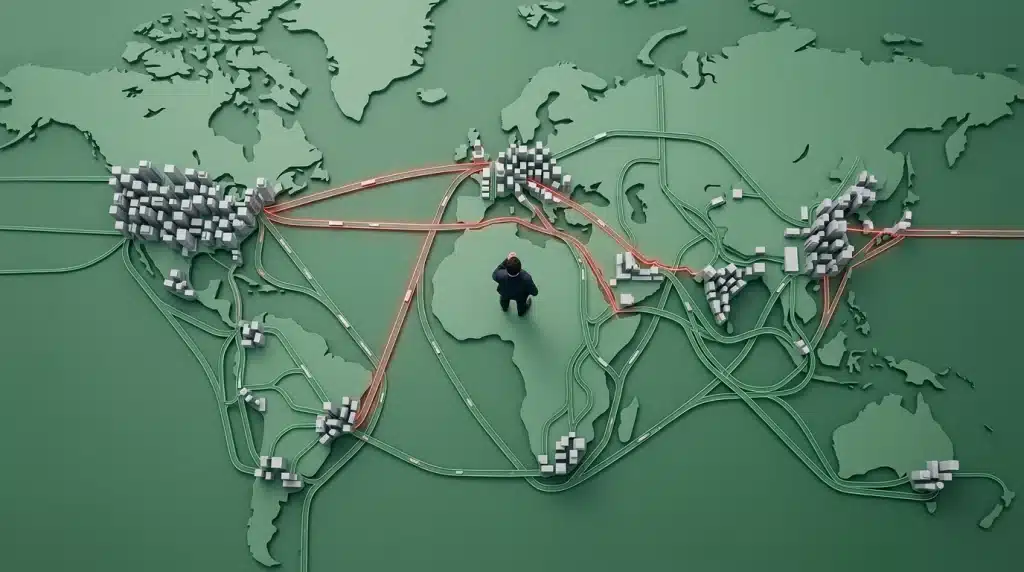
A direct consequence of this volatility is the intense focus on supply chain resilience. For decades, the primary goal was efficiency, often meaning reliance on a single country or region for key components (a practice now seen as incredibly risky). Today, the objective is security. Companies are diversifying their sourcing, a strategy known as “near-shoring” or “friend-shoring,” to mitigate geopolitical risks. This is much like a home chef learning not to rely on a single grocery store that might close unexpectedly, instead cultivating relationships with a local butcher, a farmer’s market, and another supermarket.
This drive for diversification represents a long-term structural change. It signals a permanent shift in the balance between cost-efficiency and operational stability, a tension that will define global trade for the foreseeable future.
Monetary Policy Divergence: A Global Perspective
Major central banks are no longer moving in lockstep. Following a period of coordinated action, institutions like the U.S. Federal Reserve, the European Central Bank (ECB), and the Bank of Japan (BoJ) are now charting distinctly different courses. This divergence is largely a response to varied domestic inflation rates and economic growth prospects. It’s a bit like different households adjusting their thermostats based on who feels hot or cold—except these adjustments can send shivers through global financial markets.
The differences in approach are stark. While one central bank might be aggressively raising rates to combat high inflation, another could be holding steady to support a fragile recovery. This creates a complex environment for international trade and investment. The data suggests—though not conclusively—that these policy gaps are widening.
A quick look at the G7 nations reveals just how varied these strategies currently are:
| Nation/Entity | Key Policy Rate | Official Inflation Target |
|---|---|---|
| United States (Fed) | 5.33% | 2.0% |
| Eurozone (ECB) | 4.50% | 2.0% |
| Japan (BoJ) | -0.08% | 2.0% |
| United Kingdom (BoE) | 5.25% | 2.0% |
| Canada (BoC) | 5.00% | 2.0% |
Note: Rates are representative and subject to frequent change.
Interest Rate Differentials and Capital Mobility
When interest rates differ significantly between major economies, money starts to move. This is the core principle of capital mobility. Investors naturally seek higher returns, and a higher interest rate in one country acts as a powerful magnet for global capital. Think of it as water flowing downhill; capital flows toward the highest yield.
This movement has profound effects. For the country with higher rates, the influx of foreign capital can strengthen its currency, making imports cheaper but exports more expensive. According to a recent report from the Bank for International Settlements, cross-border banking flows to higher-yield economies increased by 22% over the last fiscal year. Understanding these dynamics is notable, and it highlights the hidden costs and benefits of financial literacy for anyone with international investments.
Conversely, economies with lower rates can experience capital flight and a weakening currency. This may help their export sector but also risks importing inflation as the cost of foreign goods and services rises. It’s a delicate balancing act with no easy answers.
Navigating Inflationary Pressures Post-Pandemic
The post-pandemic economic environment has been a primary driver of this policy split. Some nations experienced rapid, demand-driven inflation, while others grappled with supply-side shocks and slower growth. Central banks were forced to tailor their responses to these unique local conditions. This is where the theoretical models meet messy reality.
Dr. Kenji Tanaka, a former board member of the Bank of Japan, explains, “The lag effect of monetary policy is notoriously long and variable. A rate hike today might not fully impact inflation for 12 to 18 months.” This uncertainty forces policymakers to make difficult judgment calls based on forecasts that can sometimes be wrong. How do you slow the economy just enough to tame inflation without triggering a recession? That remains the billion-dollar question for central bankers.
The Role of Quantitative Tightening
Adding another layer of complexity is Quantitative Tightening (QT). This is the process where central banks reduce the size of their balance sheets, which were expanded significantly through asset purchases (Quantitative Easing) during the crisis. By letting bonds mature without reinvesting the proceeds or by actively selling them, a central bank effectively removes money from the financial system.
QT acts as a secondary brake on the economy, working alongside interest rate hikes. The underrated factor here is its psychological impact on markets—investors know there is one less major buyer in the bond market, which can push yields up independently of official policy rate changes. The coordination of rate hikes with QT is a relatively new experiment, and its full impact on how news and education shape economic opportunities is still being documented.
The lag effect of monetary policy is notoriously long and variable. A rate hike today might not fully impact inflation for 12 to 18 months.
— Dr. Kenji Tanaka, former board member of the Bank of Japan
| Policy Area | Key Implication & Trajectory |
|---|---|
| International Trade | Shift from hyper-globalization to protectionism, regional blocs, and a focus on supply chain resilience over pure cost efficiency. |
| Monetary Policy | Major central banks are diverging, creating interest rate differentials that drive capital flows and currency volatility. |
| Fiscal Strategy | Governments face a balancing act between managing high public debt and supporting economic growth, leading to tough choices on spending and taxes. |
| Geopolitical Influence | Conflicts and sanctions directly impact energy security and trade routes, forcing a realignment of economic alliances based on stability. |
| Climate & Digital Policy | Green transitions and digital regulations are creating new markets and significant compliance challenges, reshaping long-term investment. |
Fiscal Strategies and Public Debt Management
Governments worldwide are walking a fiscal tightrope. Following periods of significant economic support, many are now grappling with the consequences: ballooning public debt and the pressing need to chart a sustainable path forward. This challenge forces a difficult conversation about spending priorities and taxation reforms. The data suggests—though not conclusively—that a new era of fiscal adjustment is underway, but its shape and speed remain highly uncertain.
This balancing act is like trying to fuel a car while siphoning gas from the tank at the same time. The goal is to keep the economy moving without running out of fuel entirely. The political will to implement austerity measures often clashes with public demand for services, creating a deadlock.
Balancing Stimulus with Fiscal Prudence
The core dilemma for policymakers is deciding when to withdraw stimulus and begin fiscal consolidation. Moving too quickly risks stifling a fragile recovery, while waiting too long can lead to an unsustainable debt burden. According to a recent working paper from the International Monetary Fund (IMF), the average public debt-to-GDP ratio in advanced economies reached 123% of GDP, a level not seen since the post-World War II era. Managing this requires a deep understanding of how news and education shape economic opportunities and public sentiment.
Finding the right mix of spending cuts and tax increases is politically treacherous. Many administrations are exploring targeted taxation on digital services and corporate profits as a less painful alternative to broad-based hikes — a political hot potato in nearly every legislature. What most people miss is how these decisions directly influence long-term growth potential. Below are some of the key fiscal challenges different economies are facing.
- For Developed Economies: The primary struggles involve funding social safety nets for aging populations, managing rising healthcare costs, and investing in green transitions without derailing industrial competitiveness.
- For Developing Economies: Challenges center on widening the tax base, reducing reliance on volatile commodity exports, and securing financing for critical infrastructure projects amid tightening global credit conditions.
The sustainability of this debt is the central question. Some economists argue that as long as economic growth outpaces the interest rate on the debt, high levels can be managed. But what happens if growth falters or borrowing costs spike? The resulting strain on public finances could force drastic cuts to necessary services, impacting everything from education to public health and making discussions about future financial predictions seem much more immediate.
Ultimately, the path chosen will depend less on economic theory and more on the political capacity to make difficult, often unpopular, long-term decisions.
The Geopolitical Influence on Economic Stability
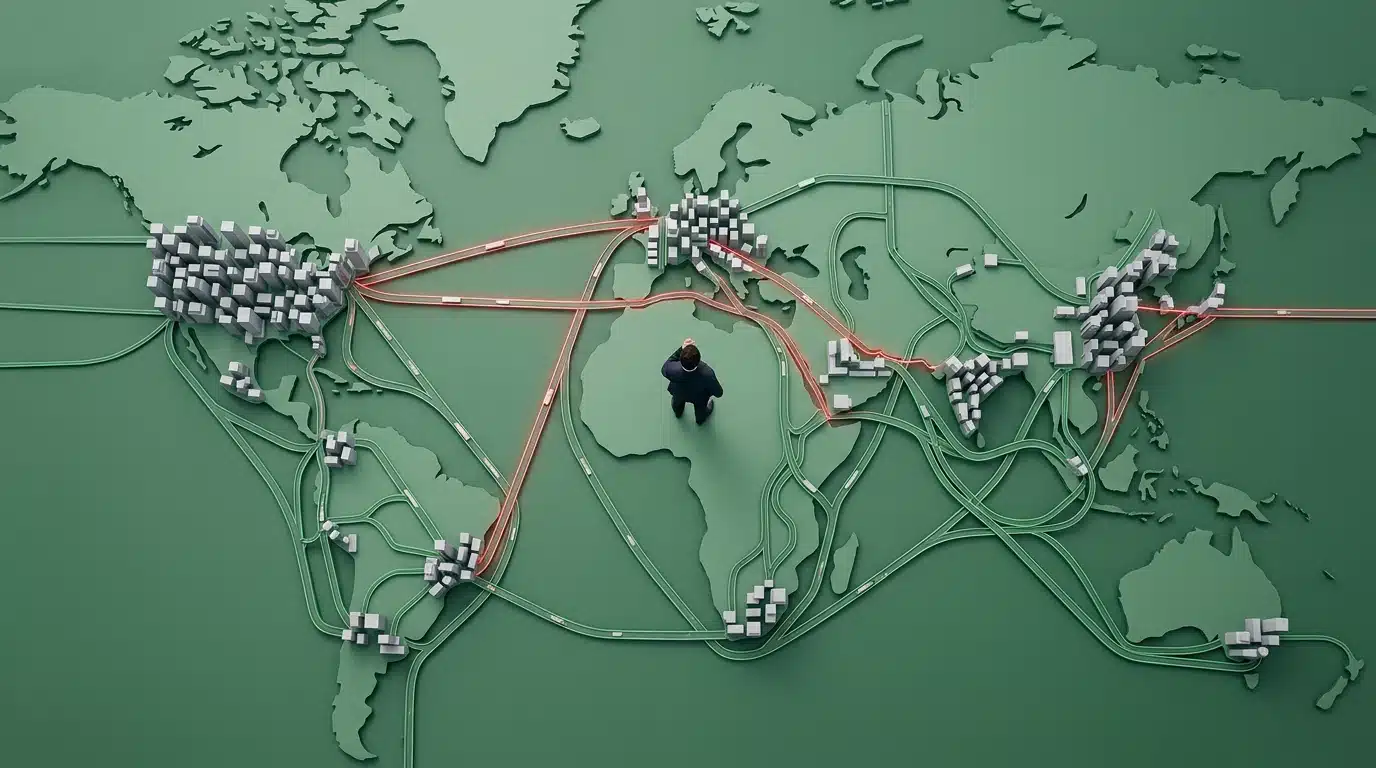
International conflicts and diplomatic standoffs directly impact global economic policy implications. These events create uncertainty, causing markets to react based on perceived risks rather than just financial data. The continuous stream of information shapes everything from investor confidence to consumer spending, illustrating the deep connection between news and economic opportunities. This isn’t just theory; it’s the reality for businesses and governments navigating a complex world.
A primary tool in these geopolitical contests is the use of economic sanctions. But what happens when sanctions target a major player in the global energy market? According to analysis from the Peterson Institute for International Economics, trade sanctions can reduce a target country’s GDP by an average of 2-3% over several years, with significant spillover effects. This forces a rapid recalculation of energy security and resource allocation for entire continents, often leading to price volatility for everyone.
The underrated factor here is the ripple effect on seemingly unrelated sectors. A disruption in energy supply doesn’t just raise gas prices — it increases manufacturing costs, strains agricultural production, and alters shipping logistics. These unseen forces and information flows can reshape financial outcomes far from the conflict’s epicenter.
As a result, many nations are now aggressively re-evaluating their supply chain dependencies and forging new economic alliances. This strategic shift suggests a long-term reordering of global trade patterns, moving away from pure efficiency toward a model that prioritizes stability and geopolitical alignment.
Emerging Policy Responses to Climate Change and Digital Transformation
As geopolitical shifts reorder supply chains, two other powerful forces are fundamentally altering the global economic policy playbook: climate change and the digital revolution. Governments are no longer just reacting; they are actively trying to shape markets to address these massive structural changes. The policy responses are a mix of incentives, regulations, and entirely new financial architecture, creating both opportunities and significant friction for international commerce.
Accelerating Green Transitions: Incentives and Challenges
The push for decarbonization has moved from the fringes to the center of economic planning. Many nations are now deploying substantial green finance initiatives and subsidies to steer private capital toward sustainable investments. According to the International Energy Agency, global investment in clean energy is expected to reach $1.8 trillion, but this figure still falls short of the estimated $4 trillion needed annually by the next decade to achieve net-zero targets. This gap highlights a persistent challenge. Public funds can only do so much.
The real task is making green projects attractive enough for private investors, which often involves de-risking investments through government guarantees or creating favorable tax structures. What most people miss is that these incentives can have complex second-order effects. For instance, subsidies for electric vehicles can strain electricity grids and raise questions about the sourcing of battery materials. Understanding these trade-offs is notable, as the hidden costs and benefits of major financial shifts are rarely straightforward.
Carbon Border Adjustment Mechanisms
One of the more contentious tools being implemented is the Carbon Border Adjustment Mechanism (CBAM). Think of it as a tariff on the carbon footprint of imported goods. The European Union is at the forefront with its CBAM, which initially targets carbon-intensive imports like steel, cement, and electricity. The goal is to prevent “carbon leakage”—where companies move production to countries with less stringent environmental laws to save costs. This policy effectively exports climate policy beyond a country’s borders.
While proponents argue it levels the playing field and encourages global decarbonization, critics raise concerns about its potential to spark trade disputes. Developing nations, in particular, worry that it imposes an unfair burden and acts as a form of protectionism. The success of such mechanisms hinges on delicate diplomatic negotiations and the creation of a standardized, verifiable system for tracking embedded carbon.
Governing the Digital Frontier: Data, AI, and Innovation
Simultaneously, the rapid expansion of the digital economy is forcing policymakers to grapple with issues that barely existed a decade ago. The rise of artificial intelligence, the dominance of large tech platforms, and the sheer volume of cross-border data flows present a regulatory puzzle. How can governments foster innovation while protecting consumer privacy and ensuring fair competition? Crafting effective AI regulation is like trying to build a dam for a river whose course changes every month.
Countries are taking divergent approaches. The EU’s AI Act, for example, uses a risk-based framework, imposing stricter rules on high-risk applications like autonomous vehicles or medical diagnostics. Meanwhile, other nations are adopting a more hands-off approach, fearing that premature regulation could stifle a key driver of economic growth. This regulatory fragmentation creates a complex environment for multinational tech companies and highlights the intersection of technology and economic opportunities.
Central Bank Digital Currencies (CBDCs)
Perhaps one of the most profound shifts on the horizon is the exploration of Central Bank Digital Currencies (CBDCs). A CBDC is a digital form of a country’s fiat currency that is a direct liability of the central bank. Several countries, including China with its e-CNY pilot, are already in advanced stages of development. The data suggests—though not conclusively—that over 100 countries, representing over 95% of global GDP, are exploring a CBDC.
The implications are immense. CBDCs could improve payment system efficiency and expand financial inclusion for unbanked populations. they also raise significant questions about privacy, the role of commercial banks, and the potential for greater government surveillance over transactions. The development of these digital currencies represents a core rethinking of money itself, touching upon deep issues of trust and the flow of financial information in a digital society.
As these twin transformations of greening and digitalization accelerate, the key challenge for policymakers will be managing their convergence. The policies designed for one area will inevitably impact the other, creating a complex web of interconnected incentives and regulations that will define the next era of global economic governance.
Forecasting Future Global Economic Policy Trajectories
Looking ahead, the confluence of digital transformation and green energy initiatives is setting the stage for major policy shifts. Projections from institutions like the International Monetary Fund (IMF) suggest a period of cautious recalibration, with their latest report anticipating global growth to hover around 3.1% if multilateral cooperation remains stable. This stability, is far from guaranteed. The real question is how nations will balance domestic priorities with the need for a unified global response.
Organizations such as the World Trade Organization (WTO) and the World Bank are attempting to broker new agreements on everything from digital trade to carbon tariffs. But can these legacy institutions effectively govern an economy increasingly influenced by decentralized finance and AI? Many experts are skeptical. The underrated factor here is the speed at which technology is outpacing regulatory frameworks—a gap that creates significant uncertainty for future policy trends.
This fragmentation is the central challenge.
The data suggests that the primary source of economic friction will not be overt trade wars but a subtle, creeping regulatory divergence. Think of it as countries developing completely different operating systems for their economies; what works in one bloc creates an error message in another. Understanding these future predictions in finance and policy becomes necessary for any long-term strategy. True progress depends on finding common ground, which requires a deep understanding of the interplay between news, education, and economic opportunity.
Ultimately, the trajectory of global economic policy will be defined by the tension between sovereign interests and the undeniable logic of collective action on shared global challenges. Finding a workable equilibrium will test the limits of global governance for decades to come.
Navigating the Age of Economic Fragmentation
The core takeaway is not that globalization is dead, but that its nature has fundamentally changed. We are moving from an integrated system built on efficiency to a fragmented one defined by resilience and strategic competition. This new paradigm demands a different kind of thinking from policymakers, corporate leaders, and individual investors alike. The ability to anticipate geopolitical risk, understand divergent monetary cycles, and adapt to green regulations is no longer a specialized skill—it is primary for survival.
As this reordering continues, the most pressing question remains: will this shift toward national and regional resilience ultimately create a more stable, albeit less efficient, global system, or will it simply sow the seeds for greater conflict and economic volatility in the long run? The answer will define the economic landscape for the next generation.
Frequently Asked Questions
How do global trade policies impact local businesses?
Global trade policies, such as tariffs, directly impact local businesses by increasing the cost of imported materials, which can raise production expenses and consumer prices. Conversely, protectionist measures might shield some local industries from foreign competition, while shifts toward supply chain resilience can create new opportunities for domestic suppliers.
What are the main challenges for central banks in managing inflation today?
Central banks face the immense challenge of curbing inflation without triggering a recession. They must also contend with the long and variable lags of monetary policy, where the full effects of an interest rate hike may not be felt for over a year. divergent policies between countries create currency fluctuations and capital flows that can complicate domestic inflation management.
How does public debt affect a nation’s economic policy choices?
High public debt significantly constrains a nation’s economic policy choices. It can limit the government’s ability to implement fiscal stimulus during downturns, as a larger portion of the budget must be allocated to interest payments. This pressure often forces difficult decisions between cutting public services, raising taxes, or risking a debt crisis if borrowing costs rise unexpectedly.
What role does geopolitics play in shaping energy policy?
Geopolitics plays a critical role in shaping energy policy by influencing the security and stability of energy supplies. International conflicts or sanctions involving major energy producers can cause severe price volatility and supply disruptions. This forces nations to prioritize energy security, often accelerating diversification to different suppliers or alternative energy sources like renewables.
Are global economic policies adapting effectively to climate change?
Global economic policies are beginning to adapt through initiatives like green finance and Carbon Border Adjustment Mechanisms (CBAMs), which aim to steer investment toward sustainability. the current pace and scale of these efforts are widely considered insufficient to meet long-term climate targets. These policies also create new sources of trade friction between countries with different regulatory standards.