Gold vs. Bitcoin 2026: Investment Diversification for US Investors

Anúncios
Gold vs. Bitcoin 2026: A Data-Driven Comparison for US Investment Diversification
The financial landscape is ever-evolving, presenting both traditional and novel opportunities for investors seeking to fortify their portfolios. As we approach 2026, a critical question for many US investors revolves around the optimal allocation between established safe-haven assets like gold and the burgeoning digital frontier represented by Bitcoin. This comprehensive, data-driven analysis aims to dissect the intrinsic value, risk profiles, historical performance, and future potential of both gold and Bitcoin, providing invaluable insights for strategic investment diversification. Understanding the nuances of each asset is paramount for making informed decisions that align with your financial goals and risk tolerance in the coming years. The debate of Gold Bitcoin 2026 is not merely academic; it’s a practical consideration for wealth preservation and growth.
Anúncios
For decades, gold has stood as the quintessential safe haven asset, revered for its ability to preserve wealth during economic downturns and inflationary periods. Its tangible nature, historical significance, and universal acceptance have cemented its status as a reliable store of value. However, the 21st century has introduced a formidable contender: Bitcoin. Born from the ashes of the 2008 financial crisis, Bitcoin represents a paradigm shift in finance, offering a decentralized, digital alternative to traditional currencies and assets. Its meteoric rise and increasing institutional adoption have forced investors to re-evaluate their diversification strategies.
This article will delve into the fundamental characteristics of both gold and Bitcoin, examining their respective roles in a diversified investment portfolio. We will explore the macroeconomic factors that influence their prices, analyze their correlation with traditional assets, and project their potential trajectories towards 2026. Our goal is to equip US investors with the knowledge necessary to navigate the complexities of these two distinct asset classes and make strategic choices for optimal long-term financial health. The future of investment diversification hinges on a clear understanding of assets like Gold Bitcoin 2026.
Anúncios
The Enduring Allure of Gold: A Historical Perspective and Future Outlook
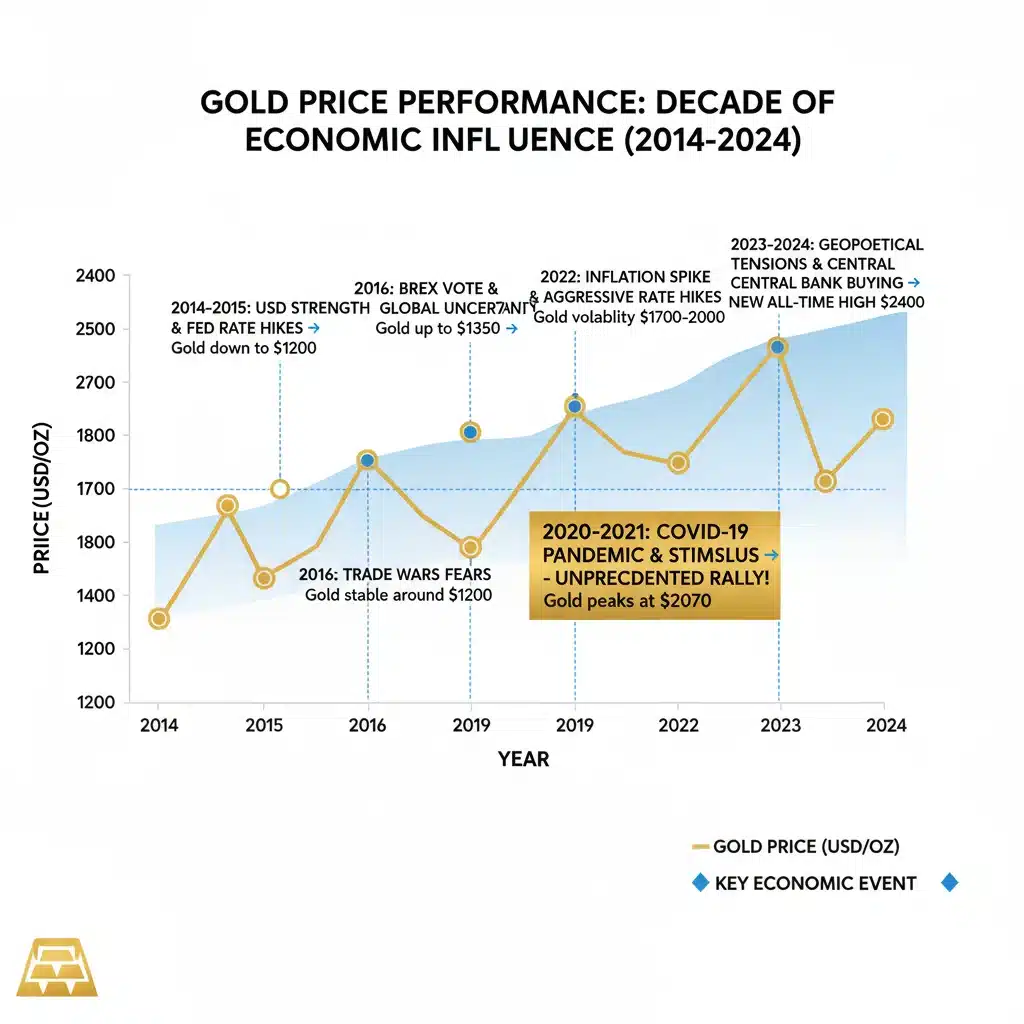
Gold’s role in human civilization spans millennia, transcending cultures and economies. Its intrinsic properties – scarcity, durability, malleability, and non-reactivity – have made it an ideal medium for exchange and a reliable store of value. Historically, gold has served as a hedge against inflation, currency devaluation, and geopolitical instability. During periods of economic uncertainty, investors often flock to gold, driving up its price as a flight to safety. This phenomenon underscores its inverse correlation with market sentiment and its capacity to act as a portfolio stabilizer.
Examining gold’s performance over the past few decades reveals a consistent, albeit sometimes slow, appreciation in value. While it may not offer the explosive growth potential of some riskier assets, its stability and capital preservation qualities are unmatched. For US investors, holding gold has often meant safeguarding purchasing power against the erosive effects of inflation and the unpredictable swings of equity markets. The physical nature of gold also provides a sense of security that digital assets cannot fully replicate, appealing to those who prefer tangible wealth.
Looking towards 2026, several factors could influence gold’s trajectory. Persistent inflationary pressures, potentially exacerbated by ongoing global supply chain disruptions and expansionary fiscal policies, could bolster gold’s appeal. Geopolitical tensions, trade wars, and sovereign debt concerns also tend to drive demand for gold as investors seek refuge from systemic risks. Central bank policies, particularly interest rate decisions by the Federal Reserve, will play a crucial role. Higher interest rates can make non-yielding assets like gold less attractive, as investors might favor interest-bearing instruments. However, if real interest rates remain low or negative, gold’s attractiveness as a store of value could increase significantly.
Furthermore, the increasing demand for gold in emerging markets, particularly from countries like India and China, for both jewelry and investment purposes, continues to provide a strong underlying support for its price. Mining supply, while relatively stable, also plays a role, with new discoveries and production costs impacting the market. For US investors considering Gold Bitcoin 2026, gold offers a time-tested ballast against economic turbulence, providing stability and a tangible store of wealth.
Gold as an Inflation Hedge: A Core Investment Thesis
One of gold’s most compelling attributes is its historical performance as an inflation hedge. When the purchasing power of fiat currencies erodes due to inflation, gold tends to retain or even increase its value. This is because gold’s supply is relatively inelastic, and its value is not tied to the policies of any single government or central bank. Its role as a counter-cyclical asset is particularly attractive during periods when traditional assets like stocks and bonds might struggle under inflationary pressures.
For US investors, understanding this aspect is vital. The current economic climate, characterized by significant government spending and expanding money supplies, raises legitimate concerns about future inflation. In such an environment, allocating a portion of one’s portfolio to gold can act as a protective measure, preserving wealth and mitigating the risks associated with currency debasement. This makes gold a crucial component for long-term investment diversification, especially when contemplating the broader investment landscape including assets like Bitcoin.
Market Dynamics and Gold’s Stability
Gold’s market dynamics are influenced by a confluence of factors, including global economic growth, interest rate expectations, geopolitical events, and currency strength. Unlike highly speculative assets, gold’s price movements are often more measured, reflecting its status as a foundational asset. While it can experience periods of volatility, its overall trend tends to be more stable compared to newer, less established asset classes. This stability is a key differentiator when comparing Gold Bitcoin 2026, particularly for risk-averse investors.
Moreover, the physical demand for gold, from jewelry manufacturers to industrial applications, provides a constant baseline for its value, independent of purely speculative trading. Central banks globally also hold vast reserves of gold, underscoring its role as a fundamental asset in the international financial system. These factors collectively contribute to gold’s enduring appeal and its potential to remain a cornerstone of diversified portfolios through 2026 and beyond.
Bitcoin: The Digital Gold and Its Disruptive Potential
Bitcoin, often dubbed ‘digital gold,’ emerged as a revolutionary financial innovation following the 2008 financial crisis. Created by an anonymous entity known as Satoshi Nakamoto, Bitcoin introduced the world to decentralized digital currency, operating on a peer-to-peer network without the need for intermediaries like banks or governments. Its core tenets of scarcity (capped at 21 million coins), immutability, and censorship resistance have drawn parallels to gold, leading many to view it as a modern alternative to the ancient metal.
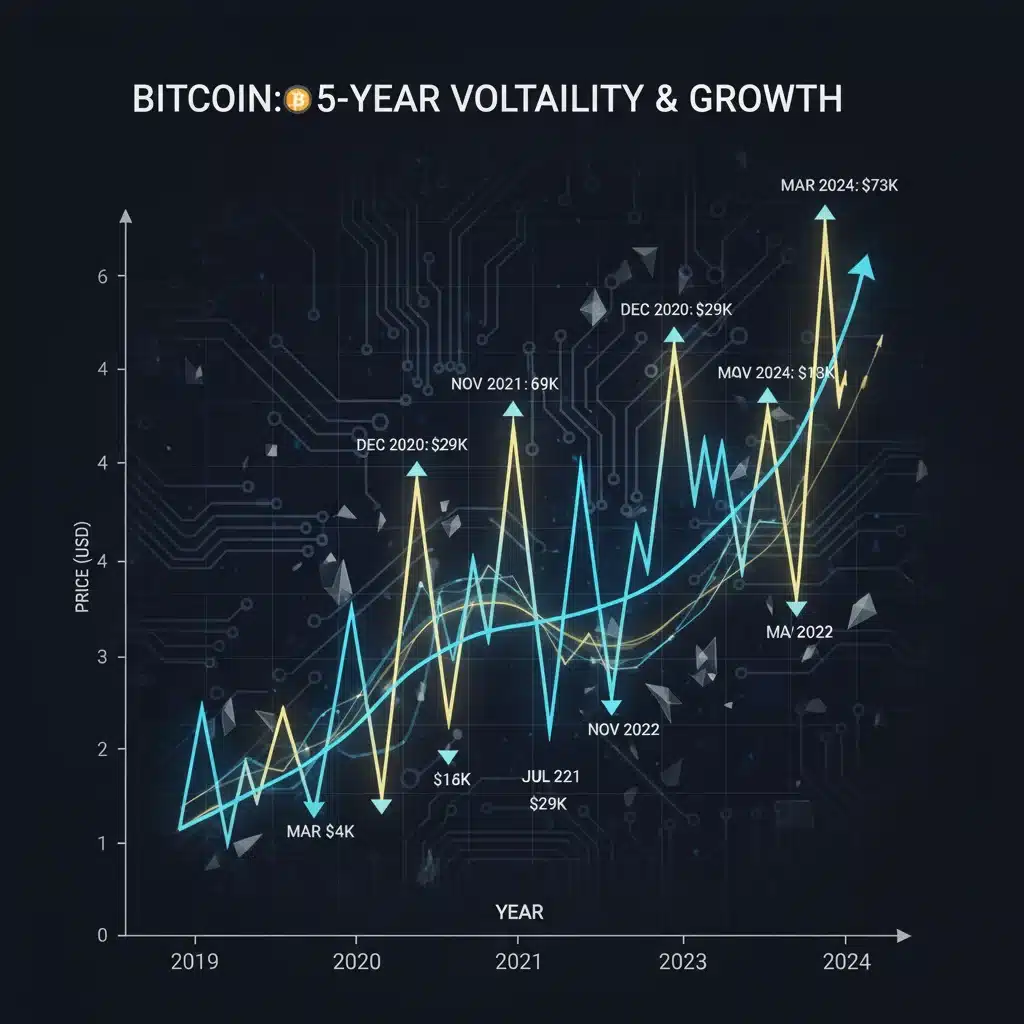
The journey of Bitcoin has been characterized by extreme volatility, unprecedented growth, and increasing mainstream acceptance. From its humble beginnings, where a single Bitcoin was worth mere cents, it has soared to astronomical values, creating immense wealth for early adopters. Its price movements are often driven by market sentiment, technological advancements, regulatory developments, and institutional adoption. For US investors, Bitcoin represents an opportunity for significant capital appreciation, albeit accompanied by higher risk.
As we project towards 2026, Bitcoin’s future hinges on several critical factors. Regulatory clarity and acceptance by governments worldwide will be paramount. As more countries develop frameworks for cryptocurrencies, the uncertainty surrounding Bitcoin’s legal status will diminish, potentially paving the way for broader adoption. Institutional interest, which has grown exponentially in recent years, is expected to continue, with more traditional financial institutions offering Bitcoin-related products and services. This institutionalization could bring greater stability and liquidity to the market.
Technological advancements within the Bitcoin ecosystem, such as improvements in scalability (e.g., the Lightning Network) and enhanced security features, will also play a vital role in its continued growth. The narrative of Bitcoin as a hedge against inflation and a store of value is gaining traction, particularly among younger generations of investors who are more comfortable with digital assets. The comparison of Gold Bitcoin 2026 highlights both their similarities and stark differences.
Bitcoin’s Volatility and Growth Potential: A Double-Edged Sword
Bitcoin’s most defining characteristic is its volatility. While this can lead to rapid price appreciation, it also exposes investors to substantial downside risk. Unlike gold, which tends to move in a more predictable fashion, Bitcoin’s price can swing wildly in short periods, influenced by news, social media trends, and macroeconomic events. This high volatility makes it an attractive asset for speculative traders seeking quick gains, but it also demands a higher risk tolerance from long-term investors.
However, this volatility is often a byproduct of its nascent stage as an asset class. As the market matures and liquidity increases, some expect Bitcoin’s volatility to temper, though it will likely remain more volatile than traditional assets. The growth potential of Bitcoin remains a significant draw. Its limited supply and increasing demand, coupled with its disruptive potential in finance, suggest that it could continue to appreciate significantly in the coming years. For US investors seeking aggressive growth, Bitcoin offers a compelling, albeit risky, proposition.
The Role of Bitcoin in Modern Diversification
For US investors, incorporating Bitcoin into a diversified portfolio is a relatively new concept. Its low correlation with traditional asset classes like stocks and bonds makes it an attractive candidate for diversification, as it can potentially reduce overall portfolio risk while enhancing returns. When traditional markets falter, Bitcoin’s independent price action can sometimes provide a buffer, though this is not always guaranteed.
The digital nature of Bitcoin also offers unique advantages, such as ease of transfer, divisibility, and accessibility from anywhere with an internet connection. These features are particularly appealing in an increasingly globalized and digital world. As the world moves towards a more digital economy, Bitcoin’s utility and adoption could expand beyond just a store of value, solidifying its place in future financial systems. The strategic consideration of Gold Bitcoin 2026 involves weighing these modern advantages against traditional strengths.
Gold vs. Bitcoin 2026: A Data-Driven Comparison for US Investors
To make an informed decision between gold and Bitcoin, or how to allocate between them, US investors need a data-driven comparison focusing on key metrics. This section will systematically compare these two assets across various dimensions relevant to investment diversification as we look towards 2026.
Store of Value: A Battle of Narratives
Both gold and Bitcoin are often touted as stores of value, but their mechanisms differ. Gold’s value stems from its historical role, physical scarcity, and universal acceptance. It has proven its ability to maintain purchasing power over centuries. Bitcoin’s store of value narrative is built on its digital scarcity, decentralized nature, and resistance to inflation through its fixed supply. While gold’s narrative is historical and tangible, Bitcoin’s is technological and emergent.
Towards 2026, gold’s store of value proposition is likely to remain robust, particularly in scenarios of high inflation or economic instability. Bitcoin’s ability to act as a reliable store of value will depend on its continued adoption, regulatory stability, and market maturity. The ongoing debate around Gold Bitcoin 2026 often centers on which asset offers a more reliable hedge against future economic uncertainties.
Volatility and Risk Profile
This is perhaps the most significant divergence between gold and Bitcoin. Gold is known for its relative stability, with price movements typically more subdued than those of equities or commodities. Its beta to the broader market is generally low, making it an effective diversifier for reducing overall portfolio volatility. The risks associated with gold primarily include opportunity cost (as it doesn’t generate income) and potential price corrections during periods of strong economic growth or rising real interest rates.
Bitcoin, conversely, is characterized by extreme volatility. Its price can fluctuate by double-digit percentages within a single day, posing significant risks for investors. These risks include regulatory crackdowns, technological vulnerabilities (though the Bitcoin network has proven highly resilient), market manipulation, and sudden shifts in investor sentiment. While this volatility offers the potential for outsized returns, it also necessitates a higher risk tolerance and a longer investment horizon to weather downturns. For US investors, assessing their comfort with this level of risk is crucial when considering Gold Bitcoin 2026.
Correlation with Traditional Assets
Gold has historically exhibited a low or negative correlation with traditional assets like stocks and bonds. This inverse relationship is a primary reason for its inclusion in diversified portfolios, as it can help mitigate losses during market downturns. When equity markets are in turmoil, gold often performs well, providing a hedge.
Bitcoin’s correlation with traditional assets has been more erratic. While it initially showed low correlation, there have been periods, particularly during significant market events, where its price movements have aligned with risk assets. However, many proponents argue that over the long term, Bitcoin’s unique market drivers will lead to a sustained low correlation, enhancing its diversification benefits. Monitoring this correlation will be key for US investors as we approach 2026.
Liquidity and Accessibility
Both gold and Bitcoin boast high liquidity, though their accessibility differs. Gold can be bought and sold through various channels, including physical bullion, ETFs, and futures contracts, making it highly accessible to investors of all sizes. The global gold market is deep and well-established, ensuring efficient price discovery and execution.
Bitcoin is also highly liquid, traded 24/7 on numerous cryptocurrency exchanges worldwide. Its accessibility has improved dramatically with the advent of user-friendly platforms and regulated investment vehicles like Bitcoin ETFs (in some jurisdictions, with potential for broader approval in the US by 2026). The digital nature of Bitcoin allows for seamless transactions across borders, appealing to a global investor base. The ease of transaction for Gold Bitcoin 2026 is a key factor.
Inflation Hedge Capability
Gold’s reputation as an inflation hedge is well-established, backed by centuries of economic history. Its value tends to rise with the cost of living, preserving purchasing power. This makes it a crucial asset in inflationary environments.
Bitcoin’s role as an inflation hedge is a newer and more debated concept. Proponents argue that its fixed supply schedule, which cannot be arbitrarily increased by central banks, makes it a superior inflation hedge to fiat currencies. Critics, however, point to its high volatility, suggesting it may not be a reliable hedge in the short to medium term. As the macroeconomic landscape evolves towards 2026, Bitcoin’s performance during sustained inflationary periods will be closely watched to validate this thesis.
Strategic Portfolio Allocation for US Investors in 2026
For US investors, the decision to invest in gold, Bitcoin, or both, should be guided by individual financial goals, risk tolerance, and investment horizon. A well-diversified portfolio typically incorporates a mix of assets with varying risk-return profiles and correlations.
Conservative Investors
Conservative investors, prioritizing capital preservation and lower volatility, might lean more heavily towards gold. A modest allocation to gold (e.g., 5-10% of the portfolio) can provide a stable hedge against economic uncertainty and inflation, without exposing the portfolio to excessive risk. While Bitcoin’s growth potential is tempting, its volatility might be too high for a conservative strategy. However, a very small, speculative allocation (e.g., 1-2%) could be considered for those wishing to gain some exposure to the digital asset space without jeopardizing core capital.
Moderate Investors
Moderate investors, comfortable with a balanced approach to risk and return, could consider a more significant allocation to both gold and Bitcoin. A balanced approach might involve a 5-15% allocation to gold for stability and inflation hedging, coupled with a 3-7% allocation to Bitcoin for growth potential and diversification benefits. This strategy allows investors to benefit from both traditional safe havens and emerging digital assets, balancing the stability of gold with the growth prospects of Bitcoin. The balancing act of Gold Bitcoin 2026 is key here.
Aggressive Investors
Aggressive investors, with a higher risk tolerance and a longer investment horizon, might allocate a larger portion of their portfolio to Bitcoin, alongside a strategic allocation to gold. For such investors, a 5-10% allocation to gold could still serve as a foundational hedge, while a 7-15% or even higher allocation to Bitcoin could be justified by its potential for exponential growth. These investors are typically prepared to weather significant market fluctuations in pursuit of higher long-term returns. They see the potential for Bitcoin to redefine financial markets and are willing to take on the associated risks.
The Importance of Rebalancing
Regardless of the chosen allocation strategy, regular portfolio rebalancing is crucial. Market movements can cause asset allocations to drift from their original targets. Periodically adjusting your holdings back to your desired percentages helps maintain your risk profile and ensures you’re not overexposed to any single asset. For instance, if Bitcoin experiences a significant rally, its weight in your portfolio might increase beyond your target, necessitating a sale of some Bitcoin to rebalance. Conversely, if gold underperforms, you might consider adding more to reach your target allocation.
Conclusion: Navigating the Future of Investment Diversification
As we look towards 2026, both gold and Bitcoin present unique and compelling cases for inclusion in a US investor’s diversified portfolio. Gold, with its millennia-old history as a store of value and inflation hedge, offers stability and a tangible safeguard against economic uncertainties. Bitcoin, the revolutionary digital asset, provides unprecedented growth potential and a new paradigm for decentralized finance, albeit with significant volatility.
The choice between Gold Bitcoin 2026 is not necessarily an either/or proposition. For many investors, a judicious allocation to both assets can offer the best of both worlds: the enduring stability and traditional hedge of gold, combined with the disruptive innovation and growth potential of Bitcoin. The optimal strategy will depend on individual risk tolerance, financial objectives, and a thorough understanding of the evolving macroeconomic landscape.
Ultimately, successful investment diversification in the coming years will require a forward-thinking approach, embracing both the proven resilience of traditional assets and the transformative power of digital innovations. By carefully analyzing the data, understanding the risks and rewards, and aligning investment decisions with personal financial goals, US investors can strategically position their portfolios to thrive in the dynamic financial environment of 2026 and beyond.