Navigating the New FAFSA: A Step-by-Step Guide for 2026 Applicants to Maximize Grants

Anúncios
Navigating the New FAFSA: A Step-by-Step Guide for 2026 Applicants to Maximize Grants
The Free Application for Federal Student Aid (FAFSA) is your gateway to federal financial assistance for college, including grants, scholarships, work-study programs, and federal student loans. For students and families applying for the 2026-2027 academic year, significant changes to the FAFSA form and process are in full effect. These modifications, part of the FAFSA Simplification Act, aim to make the application process easier, expand eligibility for federal student aid, and provide a more streamlined experience. Understanding these updates is crucial for 2026 applicants looking to maximize their grants and other financial assistance. This comprehensive guide will walk you through the new FAFSA process, highlighting key changes and offering strategic advice to ensure you secure the most aid possible.
Anúncios
The Evolved FAFSA: What’s New for 2026 Applicants?
The FAFSA has undergone its most substantial transformation in decades. These changes are designed to simplify the application, reduce barriers to entry, and offer a clearer picture of a student’s financial need. For 2026 applicants, these updates mean a new approach to how financial aid is calculated and awarded. Let’s delve into the core modifications:
Simplified Application Form
One of the most welcome changes is the reduction in the number of questions on the FAFSA form. The new FAFSA is significantly shorter, cutting down the previous 108 questions to approximately 36. This simplification aims to make the application less daunting and quicker to complete, encouraging more students to apply for aid.
Anúncios
The "Student Aid Index" (SAI) Replaces the "Expected Family Contribution" (EFC)
Perhaps the most impactful change is the replacement of the Expected Family Contribution (EFC) with the Student Aid Index (SAI). While both are indices used to determine financial need, the SAI calculation is different. The SAI can be a negative number (down to -1500), indicating a higher level of financial need and potentially more eligibility for federal grants. This change aims to better reflect a family’s ability to pay for college and expand Pell Grant eligibility.
Expanded Pell Grant Eligibility
With the introduction of the SAI, more students, particularly those from low-income backgrounds, are expected to qualify for Pell Grants. The new FAFSA process includes a direct link to federal poverty guidelines, making it easier for eligible students to receive the maximum Pell Grant award. This is a significant boon for many families, as Pell Grants do not need to be repaid.
Changes to Reporting Family Information
The new FAFSA introduces updated rules for reporting family information, particularly concerning divorced or separated parents. The parent who provides the most financial support to the student, rather than the parent with whom the student lived most, will now be responsible for providing their financial information on the FAFSA. This change is intended to more accurately reflect the financial resources available to the student.
Direct Data Exchange with IRS
To streamline the process and reduce errors, the new FAFSA mandates the use of direct data exchange with the IRS. This means that applicants and contributors (parents, spouses) will be required to consent to the direct transfer of their tax information from the IRS to the FAFSA. This not only simplifies the data entry process but also helps prevent common mistakes that could delay aid processing.
Impact on Small Businesses and Farms
Under the new FAFSA, the net worth of small businesses and family farms will now be included in the asset calculation for financial aid purposes. Previously, these assets were often excluded. This change could potentially impact the SAI for families who own such assets, so it’s important to understand how this might affect your eligibility.
Step-by-Step Guide for 2026 FAFSA Applicants
Navigating these changes might seem complex, but by following a structured approach, you can successfully complete your FAFSA and maximize your grant potential. Here’s your step-by-step guide:
Step 1: Gather Necessary Documents and Information
Before you even start the application, preparation is key. Having all your documents ready will save you time and reduce stress. For the 2026-2027 FAFSA, you will need:
- Your Social Security number (and your parents’ if you are a dependent student).
- Your Alien Registration number if you are not a U.S. citizen.
- Federal tax information or tax returns for the relevant tax year (for 2026-2027 FAFSA, you’ll generally use 2024 tax information).
- Records of untaxed income (e.g., child support received, interest income, veterans non-education benefits).
- Information on cash, savings, and checking account balances.
- Information on investments (e.g., real estate excluding your primary residence, stocks, bonds, mutual funds).
- Information on business and farm assets (if applicable).
Step 2: Create Your FSA ID (If You Don’t Have One)
Both the student and at least one parent (for dependent students) will need an FSA ID. This is a username and password combination that serves as your electronic signature and allows you to access federal student aid websites. If you don’t have one, create it well in advance at studentaid.gov. It can take up to three days for your FSA ID to become active, so don’t wait until the last minute.
Step 3: Understand the "Contributor" Role and Consent to IRS Data Exchange
A significant change is the introduction of the "contributor" role. A contributor is anyone (student, parent, spouse) who is required to provide information on the FAFSA. All contributors must provide consent for the direct data exchange with the IRS. Without this consent, even if you manually enter the information, your FAFSA will be incomplete, and you won’t be eligible for federal aid. This consent is mandatory, even if a contributor did not file taxes.
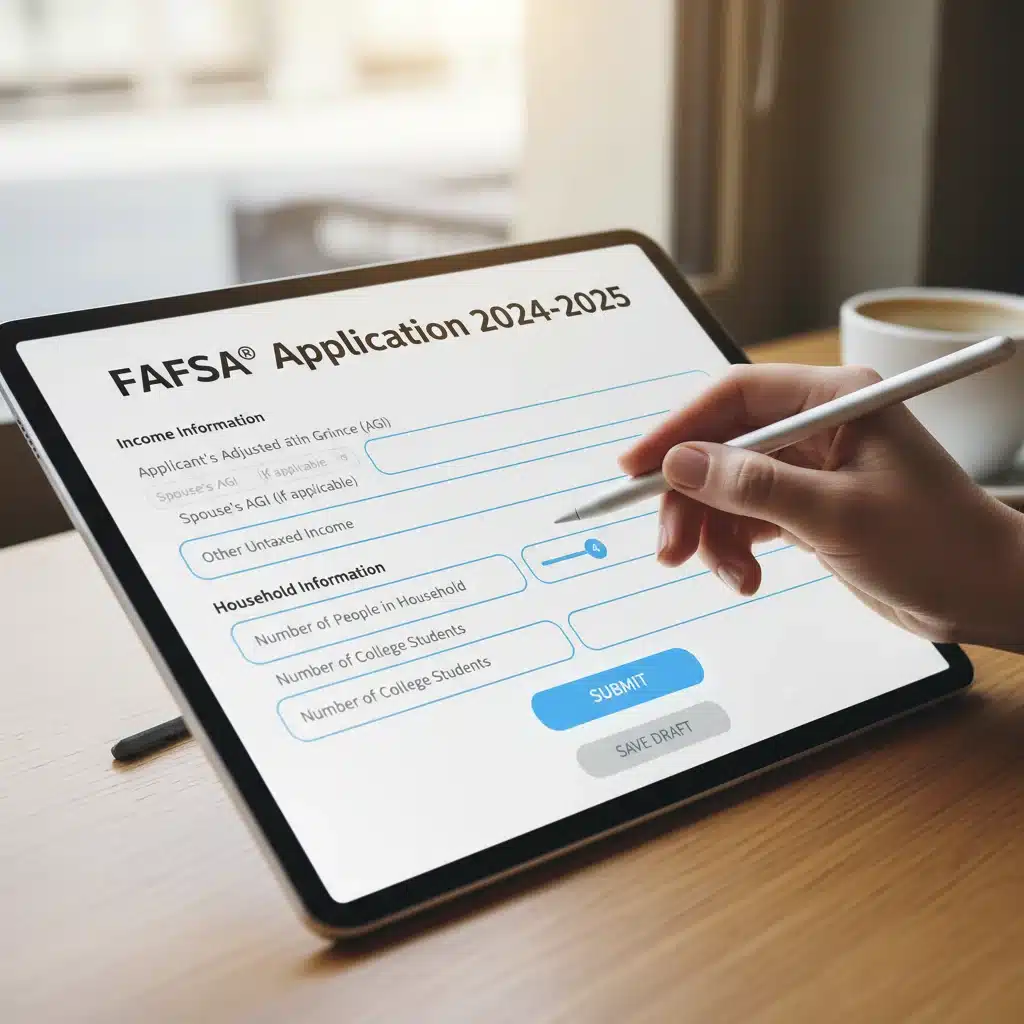
Step 4: Complete the FAFSA Online
The FAFSA for the 2026-2027 academic year typically opens on October 1st, 2025. However, due to the FAFSA Simplification Act, the opening date for the 2024-2025 FAFSA was delayed, and future opening dates could shift. Always check the official Federal Student Aid website for the most up-to-date information on application availability.
- Log In: Use your FSA ID to log in to the FAFSA website.
- Start a New FAFSA: Select the correct aid year (2026-2027).
- Provide Personal Information: Fill in your demographic details accurately.
- Invite Contributors: If you are a dependent student, you will invite your parent(s) to contribute to your FAFSA. They will receive an email and use their FSA ID to log in and provide their information.
- Consent to IRS Data Exchange: All contributors, including the student, must provide consent to retrieve tax data directly from the IRS. This is a crucial step for eligibility.
- Review and Sign: Carefully review all the information for accuracy. Once confirmed, electronically sign and submit your FAFSA using your FSA ID.
Step 5: Review Your Student Aid Index (SAI)
After submitting your FAFSA, you will receive a FAFSA Submission Summary, which replaces the Student Aid Report (SAR). This summary will include your Student Aid Index (SAI), which colleges use to determine your eligibility for federal financial aid. Review this summary carefully for any errors. If you find mistakes, you’ll need to make corrections on the FAFSA website.
Step 6: Understand Your Financial Aid Offer
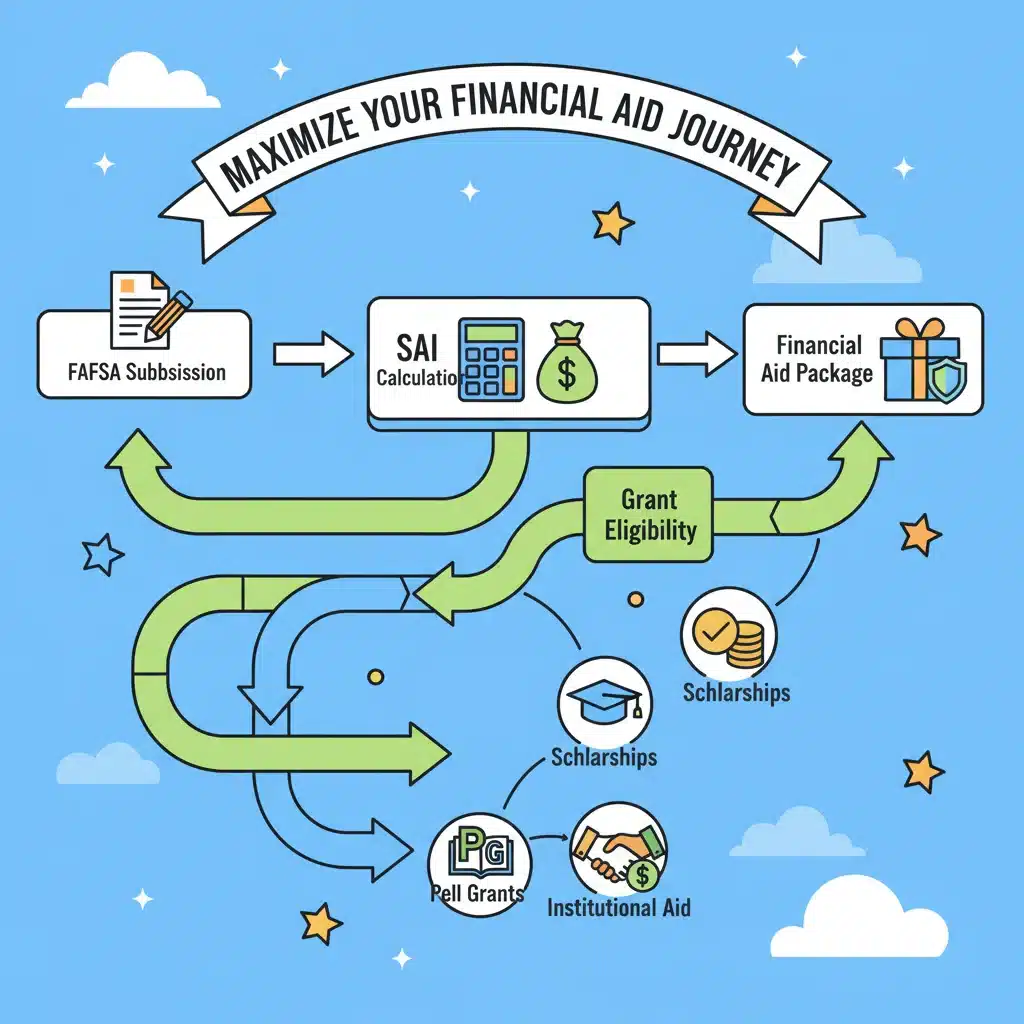
Once colleges receive your FAFSA information, they will use your SAI to calculate your financial aid package. This package will outline the types and amounts of aid you’re eligible for, which may include:
- Grants: Money you don’t have to repay (e.g., Pell Grants, Federal Supplemental Educational Opportunity Grants – FSEOG).
- Scholarships: Aid often based on merit, specific criteria, or need, which also doesn’t need to be repaid.
- Work-Study: A program allowing you to earn money to help pay for educational expenses through part-time employment.
- Federal Student Loans: Money you borrow and must repay with interest (e.g., Direct Subsidized Loans, Direct Unsubsidized Loans).
Compare the financial aid offers from different schools carefully. Focus on the "free money" (grants and scholarships) first, as this directly reduces your out-of-pocket costs.
Maximizing Your Grants: Strategic Tips for 2026 Applicants
Securing grants is often the top priority for students seeking financial aid, as they do not require repayment. Here’s how 2026 applicants can strategically maximize their grant eligibility:
1. Apply Early and Accurately
Many grants are awarded on a first-come, first-served basis, or by specific deadlines set by states and colleges. Submitting your FAFSA as soon as it opens (typically October 1st, but verify for 2026-2027) dramatically increases your chances of receiving available funds. Accuracy is also paramount; errors can delay processing and jeopardize your aid.
2. Understand Your SAI and Its Implications
The new FAFSA’s SAI calculation is designed to expand Pell Grant eligibility. Familiarize yourself with how the SAI is determined and how specific financial factors (income, assets) contribute to it. A lower SAI generally means more grant eligibility. The ability for the SAI to be negative (-1500) is particularly beneficial for students with the highest financial need.
3. Explore State and Institutional Grants
While the FAFSA primarily determines federal aid, many states and individual colleges use FAFSA data to award their own grants and scholarships. Research what state grants are available where you plan to attend college. Also, investigate each college’s financial aid website for institutional grants that might be available based on need, merit, or specific criteria.
4. Report All Income and Assets Correctly, But Strategically
Ensure all financial information is reported accurately. However, be aware of how certain assets are treated. For instance, funds in a 529 college savings plan owned by an independent student or a dependent student’s parent are considered parental assets and have a smaller impact on aid eligibility than assets owned directly by the student. Understanding these nuances can help in financial planning well before applying.
5. Understand the Impact of Family Size
The FAFSA Simplification Act places a greater emphasis on family size, directly linking it to federal poverty levels to determine Pell Grant eligibility. This means larger families, especially those with multiple children in college, may see increased grant opportunities.
6. Seek Out "Special Circumstances" Consideration
If your family’s financial situation has changed significantly since the tax year used for the FAFSA (e.g., job loss, divorce, medical expenses), contact the financial aid office at your prospective colleges. They have the discretion to make adjustments to your FAFSA data, potentially increasing your aid eligibility. This is known as a "professional judgment" review.
Common Pitfalls to Avoid with the New FAFSA
Despite the simplification efforts, certain mistakes can still hinder your financial aid process. Be aware of these common pitfalls:
- Missing Deadlines: Federal, state, and institutional FAFSA deadlines vary. Missing any of them could mean missing out on crucial aid.
- Failing to Create an FSA ID in Time: As mentioned, it takes time for an FSA ID to become active. Don’t wait until the last minute.
- Not Consenting to IRS Data Exchange: This is a mandatory step. Without consent from all contributors, your FAFSA will be incomplete.
- Incorrectly Identifying the "Responsible Parent": For divorced or separated parents, ensure the parent providing the most financial support is the one completing their section of the FAFSA.
- Ignoring the FAFSA Submission Summary: Always review this document for errors and make corrections promptly.
- Not Following Up with Colleges: Some colleges may require additional documentation or have specific forms to complete for institutional aid. Stay in communication with their financial aid offices.
- Assuming You Won’t Qualify: Many families mistakenly believe their income is too high to qualify for aid. The new FAFSA and SAI calculations might surprise you. Always apply!
Beyond FAFSA: Other Avenues for Financial Aid
While the FAFSA is foundational, it’s not the only source of financial assistance. Supplement your FAFSA efforts with these strategies:
Scholarship Search
Actively search for scholarships from private organizations, local community groups, your high school, and professional associations. Websites like Fastweb, College Board, and Scholarship.com are excellent resources. Scholarships are essentially free money and can significantly reduce your college costs.
College-Specific Aid
Many colleges offer their own scholarships and grants that are not necessarily tied to federal aid. Some require separate applications, while others are automatically considered based on your admissions application. Always check with the financial aid office of each school you are applying to.
State Aid Programs
Beyond what FAFSA helps determine, many states have specific grant and scholarship programs for their residents. Research your state’s higher education agency website for details on these opportunities. Some state aid might require additional forms or specific academic achievements.
Employer Tuition Benefits
If you or your parents are currently employed, check if their employers offer any tuition assistance or reimbursement programs. This is a frequently overlooked benefit that can provide substantial savings.
Military Benefits
For veterans, active-duty service members, or their dependents, various military aid programs (like the GI Bill) can cover significant educational expenses. Explore these options if applicable.
The Future of Financial Aid: What 2026 Applicants Can Expect
The FAFSA Simplification Act represents a significant shift, and its full impact will continue to unfold in the coming years. For 2026 applicants, these changes are designed to be beneficial, offering a more accessible application and broader eligibility for federal aid, especially Pell Grants. The emphasis on direct data exchange with the IRS also points towards a future with fewer manual errors and a quicker processing time.
However, it’s important to remain vigilant and proactive. Financial aid policies can evolve, and state and institutional aid programs may adjust in response to federal changes. Continuously checking official sources like studentaid.gov and the financial aid websites of your prospective colleges will ensure you have the most current information.
Conclusion
Navigating the new FAFSA for 2026 applicants requires diligence and an understanding of the updated processes. By preparing thoroughly, submitting your application early and accurately, consenting to the IRS data exchange, and strategically understanding the Student Aid Index, you can significantly enhance your chances of maximizing grants and other federal financial aid. Remember, the goal of these changes is to make college more affordable and accessible. By taking the necessary steps, you can unlock the financial support needed to achieve your educational dreams. Don’t let the complexities deter you; empower yourself with knowledge and proactive planning.
For further assistance, always reach out to the financial aid office at your chosen institutions or consult the resources available on the Federal Student Aid website. Your future education is an investment, and securing the right financial aid is a critical part of that journey.