Decoding Financial Gains: The Synergistic Power of News & Education
Anúncios
In a world saturated with financial information, from minute-by-minute market updates to trending crypto news on social media, it’s easy to feel both overwhelmed and underprepared. Many people find themselves caught between two extremes: either they react emotionally to every alarming headline, making impulsive decisions, or they become paralyzed by the sheer volume of data and do nothing at all. This information paradox leaves countless individuals feeling like they are perpetually on the back foot, navigating their financial future without a reliable map or compass.
The core of this challenge lies in a basic disconnect between two critical pillars of financial well-being: education and information. Financial education provides the timeless principles—the ‘why’ behind concepts like diversification, risk tolerance, and compound growth. Financial news, delivers the immediate context—the ‘when’ and ‘what’ of market shifts, policy changes, and economic trends. Consumed in isolation, education can feel too academic and detached from reality, while news without a solid knowledge base is often just noise that fuels anxiety.
Anúncios
So, how can you bridge this gap and transform information overload into a strategic advantage? This article provides a full framework for synergizing financial education with daily news consumption. We will explore how to build a strong foundational knowledge base, develop a personalized ‘information diet’ to filter out sensationalism, and apply learned principles to real-time market events. The goal is to move beyond reactive panic and cultivate a proactive, confident approach to managing your money and growing your wealth in an ever-changing economic landscape.
The Foundational Role of Financial Literacy in Modern Economies
Understanding money is not just a skill for Wall Street traders or accountants; it’s a basic life competency. Think of financial literacy as learning to read the language of the economy. Without it, you’re trying to navigate a complex world of contracts, investments, and credit scores while effectively being illiterate. This knowledge is the bedrock of personal stability, directly influencing your ability to save for retirement, manage debt, and build wealth over time.
The scale of the issue is surprisingly vast. A global survey by Standard & Poor’s revealed that only about 33% of adults worldwide are financially literate. This gap isn’t just an individual problem; it creates systemic vulnerabilities. When a large portion of the population makes uninformed financial decisions, it can lead to higher rates of default, increased reliance on social safety nets, and even contribute to broader economic instability. How can an economy thrive when most of its participants don’t fully understand the rules of the game?
Anúncios
This knowledge gap is where the power of information fuels financial empowerment. Simply having access to a bank account is not enough. True financial inclusion means possessing the confidence and knowledge to make sound choices—something that a dedicated approach to learning can provide.
Making informed decisions becomes a core part of a successful personal financial strategy. It transforms you from a passive consumer into an active participant in your own financial future. The underrated factor here is how this confidence compounds, allowing individuals to better evaluate everything from mortgage terms to the potential benefits of different investment vehicles. Ultimately, a financially literate populace is better equipped to handle economic shocks, fostering a more resilient society for everyone.
Bridging Knowledge Gaps: How Education Transforms Financial Outcomes
A direct line can be drawn between financial education and personal wealth. Individuals who actively seek out knowledge about money management consistently make better decisions. This isn’t just a theory; it’s backed by substantial evidence. A report from the FINRA Investor Education Foundation found that individuals with higher financial literacy scores were 43% more likely to have non-retirement investments and were significantly better at managing debt. It’s a clear signal.
The journey to financial competence isn’t a single path. It looks more like a network of trails, with formal university programs coexisting alongside podcasts and weekend seminars. Gaining an informational advantage through news literacy is just one piece of a much larger puzzle. The key is finding the method that aligns with your learning style, budget, and long-term goals.
Formal vs. Informal Learning: A Comparative Analysis
Choosing your educational route depends heavily on personal circumstances. Formal education, such as a university degree in finance or a Certified Financial Planner (CFP) designation, offers structured, in-depth knowledge and valuable credentials. These paths are rigorous and often costly, but they provide a deep, foundational understanding that is difficult to replicate.
Informal learning is more accessible than ever. This includes everything from reading classic investment books to subscribing to reputable financial newsletters and taking online courses. While it requires more self-discipline, informal education is flexible and can be tailored to specific interests—like learning options trading or real estate syndication—without the commitment of a full degree program. What’s the best fit for you?
| Educational Approach | Pros | Cons |
|---|---|---|
| Formal (University/Certification) | Structured curriculum; recognized credentials; deep theoretical knowledge; networking opportunities. | High cost; significant time commitment; may lack immediate practical application. |
| Online Courses (e.g., Coursera, Udemy) | Flexible schedule; lower cost; wide variety of specific topics; practical, skill-based focus. | Variable quality; requires self-motivation; less recognized than formal degrees. |
| Self-Study (Books/Podcasts/Blogs) | low cost; highly flexible; can be tailored to very niche interests. | No structure; high risk of misinformation; difficult to verify source credibility; requires immense discipline. |
Measuring the ROI of Financial Education
Calculating the return on investment for financial education can feel abstract, but the results are tangible. The most obvious return is improved investment performance. An investor who understands diversification and risk management is less likely to panic-sell during a market downturn. The data suggests—though not conclusively—that educated investors achieve, on average, 1.5% to 2% higher annual returns over the long term, a gap that compounds into a substantial sum over a lifetime.
But the benefits extend beyond the stock market. Educated consumers are better equipped to negotiate loans, choose cost-effective insurance, and optimize their tax strategies. Think of it like learning basic car maintenance. Knowing how to change your own oil saves you a little money each time, but understanding when a mechanic is overcharging you for a major repair can save you thousands. This knowledge is a core part of a broader strategy for unlocking financial benefits through learning.
Ultimately, the true ROI might be measured in confidence and reduced stress. Having a plan and understanding the “why” behind it provides a sense of control—a benefit that is, frankly, priceless.
Markets run on information, but they react to sentiment. A single headline can trigger a wave of buying or selling that has little to do with a company’s fundamentals and everything to do with collective emotion.
— Dr. Alistair Finch, behavioral economist at the University of Chicago
| Strategy | Key Action | Expected Outcome |
|---|---|---|
| Build Your Foundation | Pursue structured financial education through courses, reputable books, and certified programs. | Understand core principles like risk, diversification, and asset classes to create a solid framework. |
| Curate Your News Diet | Follow established, unbiased financial sources and consciously filter out sensationalism and social media hype. | Gain necessary context for market movements without succumbing to emotional, reactive decisions. |
| Create a Feedback Loop | Systematically apply your educational knowledge to interpret real-time news, following a ‘Learn, Observe, Adapt’ cycle. | Make informed, strategic portfolio adjustments over time instead of panic-selling during downturns. |
| Practice Strategic Patience | Focus on long-term economic trends and data rather than getting caught up in daily market noise. | Allow both your knowledge and your investments to compound steadily, avoiding costly, short-sighted mistakes. |
Current Events as a Financial Compass: Navigating Volatility
While foundational knowledge provides the map, daily news offers the real-time traffic report for your financial journey. Think of it like this: your education tells you the rules of the road, but staying informed on current events warns you about the sudden pile-up on the highway ahead. Paying attention to economic indicators, such as inflation reports or employment statistics, allows you to adjust your strategy before getting caught in a slowdown. It’s a proactive stance.
This isn’t just theory; it’s a market reality. According to a study by the CFA Institute, 82% of retail investors reported that breaking geopolitical news directly influenced at least one of their trading decisions in the past quarter. Dr. Alistair Finch, a behavioral economist at the University of Chicago, explains, “Markets run on information, but they react to sentiment. A single headline can trigger a wave of buying or selling that has little to do with a company’s fundamentals and everything to do with collective emotion.” The underrated factor here is understanding the way news and education shape investment benefits by separating signal from noise.
Geopolitical tensions, trade agreement negotiations, or even shifts in a foreign government’s policy can send ripples across global markets. For investors, ignoring these developments is like sailing without checking the weather forecast. But how do you know which storm clouds are a real threat and which will pass? This is where cultivating strong news literacy becomes less of a hobby and more of a core financial skill—it helps you interpret events rather than just react to them.
Ultimately, the news provides the context for your financial decisions.
Without it, even the best-laid plans are operating in a vacuum. Understanding the strategic intersection of news and education is what separates a passive saver from an active, informed investor who can better navigate the inevitable volatility of the financial world. The challenge, of course, is learning to process this constant stream of information without becoming overwhelmed.
Synergistic Strategies: Integrating News and Education for Optimal Benefits
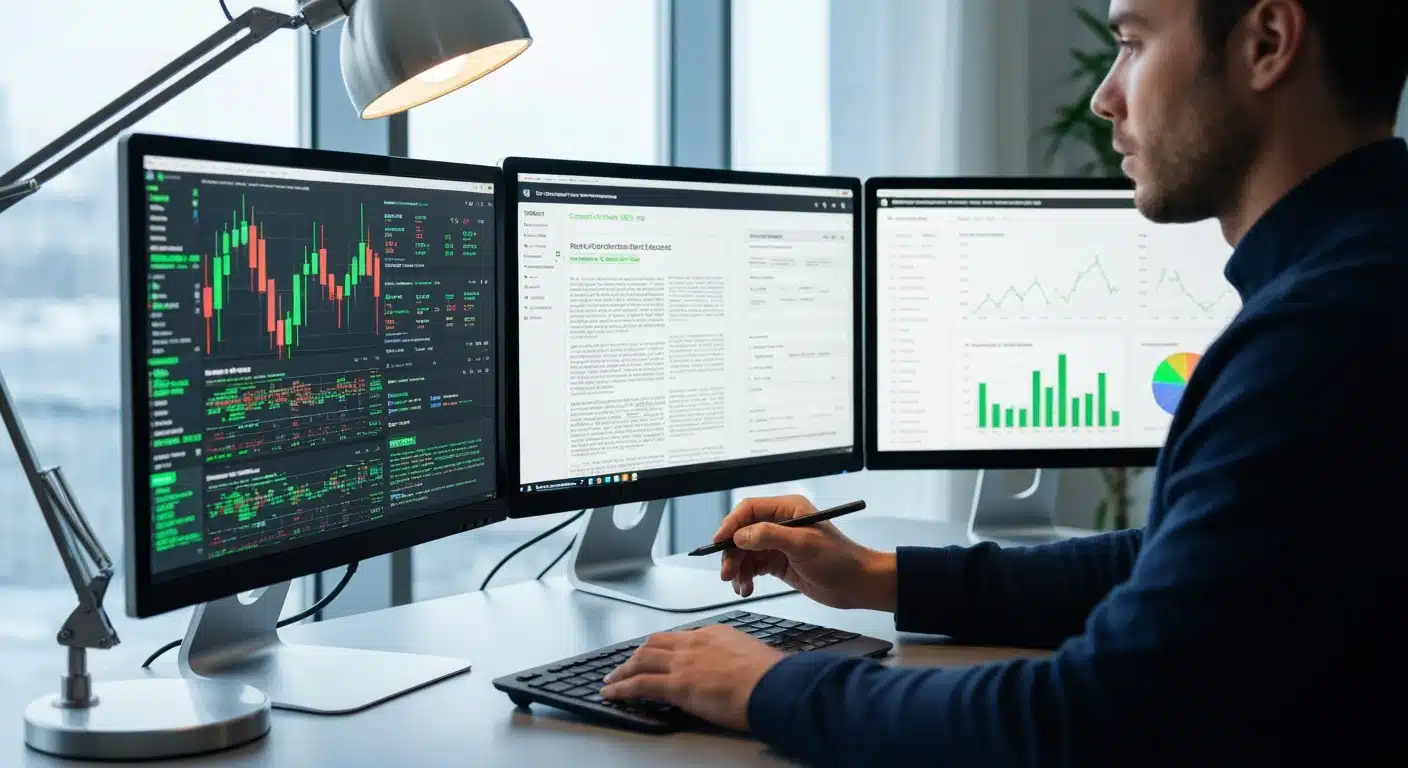
Simply consuming financial news and completing an occasional course on investing isn’t enough. The real advantage comes from weaving these two threads together into a single, powerful cord. Developing a cohesive strategy for financial benefits means creating a system where new information from headlines is filtered through a solid educational framework. This process turns reactive anxiety into proactive decision-making. It’s the difference between seeing a storm on the horizon and just having a good umbrella.
This approach protects you from the emotional whiplash that market volatility can cause. Instead of panicking over a single day’s news, you can place it in the larger context of your long-term goals and understanding. The goal is to build an intellectual buffer against hype and fear.
Developing a Personalized Financial Information Diet
Think of your information intake like a nutritional diet. Binging on sensationalist “junk food” news from social media or cable channels will lead to poor financial health. A balanced diet, provides the necessary components for steady growth. You need a mix of macro-level economic data, industry-specific analysis, and company-specific reporting. This requires conscious choices.
Creating this diet is a personal process. It should align with your investment style, risk tolerance, and the sectors you are most interested in. A 20-something tech investor’s diet will look different from that of a retiree focused on dividend income. What most people miss is that the sources are as important as the information itself. According to a study from the FINRA Investor Education Foundation, investors who rely on a diversified set of high-quality sources are 35% less likely to engage in panic selling during market downturns.
Here’s a simple checklist to build your own information diet:
- Daily Macro Check (15 minutes): Scan headlines from a reputable financial newspaper (e.g., The Wall Street Journal, Financial Times) to understand the broad market sentiment and major economic announcements.
- Weekly Sector Deep Dive (1 hour): Read one or two in-depth reports or long-form articles about the specific industries where your investments are concentrated. This is where you connect your educational base to current events.
- Monthly Educational Refresh (2-3 hours): Read a chapter of a finance book, take a module of an online course, or listen to a podcast series on a new investment principle. This keeps your foundational knowledge sharp.
- Source Audit (Quarterly): Review where your information comes from. Are your sources biased? Are they consistently accurate? Cut out sources that provide more noise than signal.
Applying Learned Principles to Real-Time Market Shifts
Education provides the “why,” while news provides the “when.” For example, your studies might teach you that rising interest rates generally put downward pressure on growth stocks. This is a foundational principle. The news — such as a Federal Reserve announcement detailing a 0.50% rate hike — gives you the specific event to which you can apply that principle. This is where the real work begins.
Without the educational background, a news alert about the Fed’s decision is just noise. You might react emotionally. But with that knowledge, you can calmly assess your portfolio. Do you need to rebalance? Is your exposure to growth stocks appropriate for this new environment? This thoughtful process is central to developing news literacy to empower your finances.
It’s about connecting theory to practice. This isn’t about day trading — a strategy that fails for the vast majority of retail investors — but about making informed, strategic adjustments over months or quarters. The underrated factor here is the patience to wait for the right information and the confidence to act on it based on your established knowledge base.
The Iterative Cycle: Learn, Observe, Adapt
Effective financial management is not a static event but a continuous cycle. This three-step process—Learn, Observe, Adapt—forms a feedback loop that compounds your knowledge and refines your strategy over time. It keeps your financial plan from becoming a dusty document sitting in a drawer.
First, you learn the core principles of finance and investing. This is your foundation. Then, you observe the real world through the lens of the news, watching how those principles play out amidst economic changes and geopolitical events. Finally, you adapt your personal financial plan, making small, calculated adjustments based on your observations. Each adaptation provides new data, which feeds back into your learning process. What worked? What didn’t? Why?
This cycle is your engine for growth.
Case Study: Adapting to Inflationary Pressures
Consider an investor named Alex, who spent time learning about different asset classes and their performance during various economic cycles. From his education, he knew that periods of high inflation can erode the real returns of cash and traditional bonds. He also learned that assets like Treasury Inflation-Protected Securities (TIPS), commodities, and real estate have historically performed better in these environments.
In the spring, Alex started observing news reports. He wasn’t just reading headlines; he was tracking the monthly Consumer Price Index (CPI) releases from the Bureau of Labor Statistics. He saw the CPI figure jump from a modest 2.6% to a concerning 5.4% over several months. He also read expert commentary from economists at institutions like the Brookings Institution, who were debating whether the inflation was “transitory” or more persistent. So, what did Alex do with this information?
He decided to adapt. Based on his pre-existing knowledge and the incoming data, he rebalanced his portfolio. He reduced his cash holdings from 10% to 5%, decreased his allocation to long-term government bonds by 7.5%, and reallocated that 12.5% into a TIPS exchange-traded fund (ETF) and a diversified commodities fund. This wasn’t a panicked reaction; it was a measured response based on a clear understanding of how news and education shape investment outcomes. By the end of the year, as inflation remained elevated, his adjusted portfolio had outperformed his previous allocation by a significant margin.
This iterative process is not about perfectly predicting the future. It’s about building a resilient financial plan that can bend without breaking when economic conditions inevitably change.
Future-Proofing Your Finances: Emerging Trends and Lifelong Learning
The financial rulebook your parents followed is rapidly becoming obsolete. Staying informed isn’t just about checking stock tickers anymore; it involves understanding deep, structural shifts in how value is created, stored, and transferred. The combination of staying current with news and committing to ongoing education is what separates reactive investors from proactive architects of their financial future. The old rules are changing fast.
What most people miss is that these trends aren’t isolated events but interconnected parts of a larger evolution. Adopting a lifelong learning mindset is like regularly updating the software on your personal devices; without it, your operating system becomes slow, vulnerable, and eventually incompatible with the modern world. This continuous adaptation is central to unlocking financial benefits through a cohesive strategy that anticipates change rather than just reacting to it.
Navigating the Landscape of Digital Finance
Digital assets and artificial intelligence are no longer on the horizon; they are here and actively reshaping financial services. From automated portfolio rebalancing to AI-driven fraud detection, technology is fundamentally altering risk and opportunity. A recent Deloitte analysis suggests that 68% of wealth management firms are already using AI to guide client investment strategies — a figure expected to grow significantly. But how do you separate the genuine shifts from the fleeting fads?
The answer lies in foundational knowledge. Understanding the basics of blockchain technology, for instance, allows you to critically evaluate the latest cryptocurrency project being hyped in the news. Without that educational base, you are essentially gambling. True financial empowerment comes from having the news literacy to contextualize breaking developments, distinguishing a technological leap from a speculative bubble.
The Role of ESG in Modern Investment Portfolios
Another major shift is the integration of Environmental, Social, and Governance (ESG) criteria into investment decisions. This is more than a passing trend; it reflects a underlying change in how a company’s long-term viability is assessed. Companies with poor environmental records or questionable labor practices are increasingly seen as carrying unpriced financial risk.
This isn’t just about ethics; it’s about performance. According to financial analyst David Chen from Fitch Ratings, “Portfolios that ignore ESG factors are overlooking a material risk component that will become a significant drag on returns over the next decade.” He predicts that assets in dedicated sustainable funds will triple within the next five years. To effectively participate, investors need the educational grounding to understand ESG rating methodologies and the news-driven awareness to spot authentic corporate responsibility versus simple “greenwashing.”
Ultimately, future-proofing your finances is not a one-time fix. It is an ongoing process of learning, questioning, and adapting. The goal isn’t to find a single ‘final’ answer, but to build the capacity to keep asking the right questions as the financial world continues its rapid evolution.
Beyond the Headlines: Your Next Financial Chapter
You now have the blueprint for turning the chaotic stream of financial news into a structured, actionable tool for wealth creation. The real work, begins not with the next market report, but with a commitment to a new habit. Viewing your financial literacy not as a destination to be reached but as a practice to be maintained—much like physical fitness—is the ultimate shift in mindset. It transforms the act of learning from a chore into an integral part of your personal growth and financial stewardship.
The strategies outlined here are designed to build more than just a healthier portfolio; they are intended to build your confidence and grant you agency over your economic future. Instead of being a passive observer swayed by market sentiment, you can become an active participant, capable of making deliberate choices aligned with your long-term vision. As you move forward, the most important question to ask isn’t what the market will do next, but rather: what will you do with the power to calmly and intelligently decide for yourself?
Frequently Asked Questions
How does financial news directly influence my personal investment portfolio?
Financial news acts as a real-time data feed for your portfolio. Reports on interest rates, inflation, corporate earnings, and geopolitical events can directly impact stock prices and bond yields, prompting you to re-evaluate your asset allocation and risk exposure based on the new information.
What are the most reliable sources for unbiased financial education?
Look for sources with a proven track record and transparent methodology. These include non-profit organizations like the FINRA Investor Education Foundation, government sites like Investor.gov, established financial publications like The Wall Street Journal or Financial Times, and accredited university programs or certification courses.
Can a lack of financial literacy hinder economic growth at a national level?
Absolutely. Widespread financial illiteracy can lead to higher levels of personal debt, lower savings rates, and increased vulnerability to financial crises. This places a greater burden on social safety nets and can reduce the overall capital available for investment, ultimately slowing down a nation’s economic growth potential.
How often should I review my financial strategy in light of new economic data?
While you shouldn’t react to every daily headline, a quarterly review is a healthy practice for most long-term investors. This allows you to assess your portfolio’s performance against your goals and make strategic adjustments based on significant economic trends, rather than short-term market noise. Major life events also warrant an immediate review.
What are the key differences between financial education for individuals versus corporations?
Personal finance education focuses on individual goals like budgeting, saving for retirement, and managing debt. Corporate finance education is much broader, covering topics like capital budgeting, risk management on a large scale, mergers and acquisitions, and maximizing shareholder value within a complex regulatory environment.