2025 COLA Increase: Social Security Adjustments for 69 Million Beneficiaries

Anúncios
The 2025 COLA increase is crucial for over 69 million Social Security beneficiaries, directly influencing their purchasing power and financial stability against inflation, ensuring benefits keep pace with living costs.
Anúncios
For millions of Americans, understanding the annual Social Security adjustments is paramount to their financial well-being. The anticipated 2025 COLA Increase is set to significantly impact approximately 69 million beneficiaries, directly affecting their monthly income and purchasing power.
Anúncios
Understanding the Cost-of-Living Adjustment (COLA)
The Cost-of-Living Adjustment, or COLA, is an essential mechanism designed to protect the purchasing power of Social Security and Supplemental Security Income (SSI) benefits. Without COLA, inflation would steadily erode the value of these benefits over time, leaving retirees, disabled individuals, and survivors with less money to cover their essential expenses.
COLA is determined by the Social Security Administration (SSA) based on changes in the Consumer Price Index for Urban Wage Earners and Clerical Workers (CPI-W). This index measures the average change over time in the prices paid by urban consumers for a market basket of consumer goods and services.
How COLA is Calculated
The calculation of COLA is not arbitrary; it follows a specific formula mandated by law. The SSA compares the average CPI-W for the third quarter of the current year (July, August, September) with the average CPI-W for the third quarter of the last year a COLA was enacted. The percentage increase, if any, is the COLA.
- CPI-W as the Benchmark: The CPI-W specifically tracks price changes for goods and services consumed by wage earners and clerical workers, making it a relevant measure for Social Security beneficiaries.
- Third Quarter Data: Only the data from July, August, and September are used for the calculation, providing a concise and timely snapshot of inflation.
- No Decrease: By law, Social Security benefits cannot decrease due to a COLA. If the CPI-W shows no increase, or even a decrease, there is no COLA, and benefits remain the same.
This systematic approach ensures that the COLA reflects real-world changes in living costs, providing a vital safeguard for those who rely on Social Security for their daily needs. The upcoming 2025 COLA increase will be a direct reflection of inflation trends observed in the preceding months.
Projected 2025 COLA Increase: What the Experts Say
While the official 2025 COLA increase won’t be announced until October, various economic forecasts and analyses offer strong indications of what beneficiaries can expect. These projections are based on current inflation trends, economic indicators, and historical data, providing an early glimpse into potential adjustments.
Experts closely monitor the CPI-W, particularly during the third quarter, as this data is crucial for the final calculation. Early estimates suggest a moderate increase, reflecting ongoing inflationary pressures, albeit potentially lower than the significant increases seen in previous years.
Key Factors Influencing the 2025 COLA
Several economic factors play a pivotal role in shaping the COLA. Understanding these influences can help beneficiaries anticipate the forthcoming adjustments.
- Inflation Rates: The primary driver of COLA is the rate of inflation. Higher inflation generally leads to a higher COLA, as the cost of goods and services rises.
- Energy Prices: Fluctuations in oil and gas prices directly impact transportation and utility costs, which are significant components of the CPI-W.
- Food Costs: Changes in food prices, which constitute a substantial portion of household budgets, also heavily influence the CPI-W and, consequently, the COLA.
- Economic Growth: Broader economic conditions, including wage growth and consumer spending, can indirectly affect inflation and the COLA.
These interconnected factors create a dynamic environment for COLA projections. While precise figures remain elusive until the official announcement, the consensus among analysts points towards a necessary adjustment to help beneficiaries maintain their living standards.
Impact on 69 Million Social Security Beneficiaries
The 2025 COLA increase is not merely a number; it represents a tangible change in the financial lives of millions of Americans. For the approximately 69 million individuals receiving Social Security benefits, this adjustment directly translates to more money in their pockets, helping them cope with rising costs.
This includes retirees, disabled workers, and survivor beneficiaries, all of whom depend on these payments for their daily expenses, healthcare, and overall financial stability. A higher COLA means increased monthly checks, which can make a significant difference in managing household budgets.
Who Benefits Most from COLA?
While all beneficiaries receive the COLA, its impact can vary depending on individual circumstances. Those with fixed incomes and limited other sources of revenue often feel the most direct benefit.
- Retirees: Many retirees rely heavily on Social Security as a primary income source. The COLA helps ensure their retirement savings stretch further as prices increase.
- Disabled Individuals: For those receiving Social Security Disability Insurance (SSDI), the COLA is crucial for covering medical expenses and daily living costs.
- Survivors: Widows, widowers, and children receiving survivor benefits also benefit from COLA, ensuring their financial support keeps pace with inflation.
The 2025 COLA increase provides a vital financial lifeline, enabling beneficiaries to maintain their purchasing power and economic security in an ever-changing economic landscape. It underscores the importance of Social Security as a foundational element of financial planning for many Americans.
Navigating Your Finances with the New COLA
Once the 2025 COLA increase is announced, beneficiaries will need to understand how it affects their personal finances. This involves more than just seeing a higher number on a check; it requires thoughtful budgeting and financial planning to maximize the benefit.
The increased income can be strategically allocated to cover rising costs in areas like groceries, utilities, and healthcare. It also presents an opportunity to review overall financial health and make necessary adjustments to long-term plans.
Practical Steps for Beneficiaries
Taking proactive steps can help beneficiaries effectively manage their finances in light of the new COLA. This could involve re-evaluating budgets, exploring new savings opportunities, or consulting with financial advisors.
- Update Your Budget: Adjust your monthly budget to reflect the increased income and allocate funds to areas where costs have risen most significantly.
- Review Healthcare Costs: Medicare premiums and deductibles can change annually, potentially offsetting some of the COLA increase. Be sure to factor these into your financial planning.
- Consider Debt Reduction: If you have high-interest debt, using a portion of the COLA increase to pay it down can significantly improve your financial standing.
- Explore Savings Options: Even a small increase in income can contribute to emergency savings or long-term investment goals.
The 2025 COLA increase is an opportune moment for beneficiaries to take stock of their financial situation and make informed decisions to secure their economic future. It’s about more than just receiving more money; it’s about smart financial stewardship.
Historical COLA Trends and Future Outlook
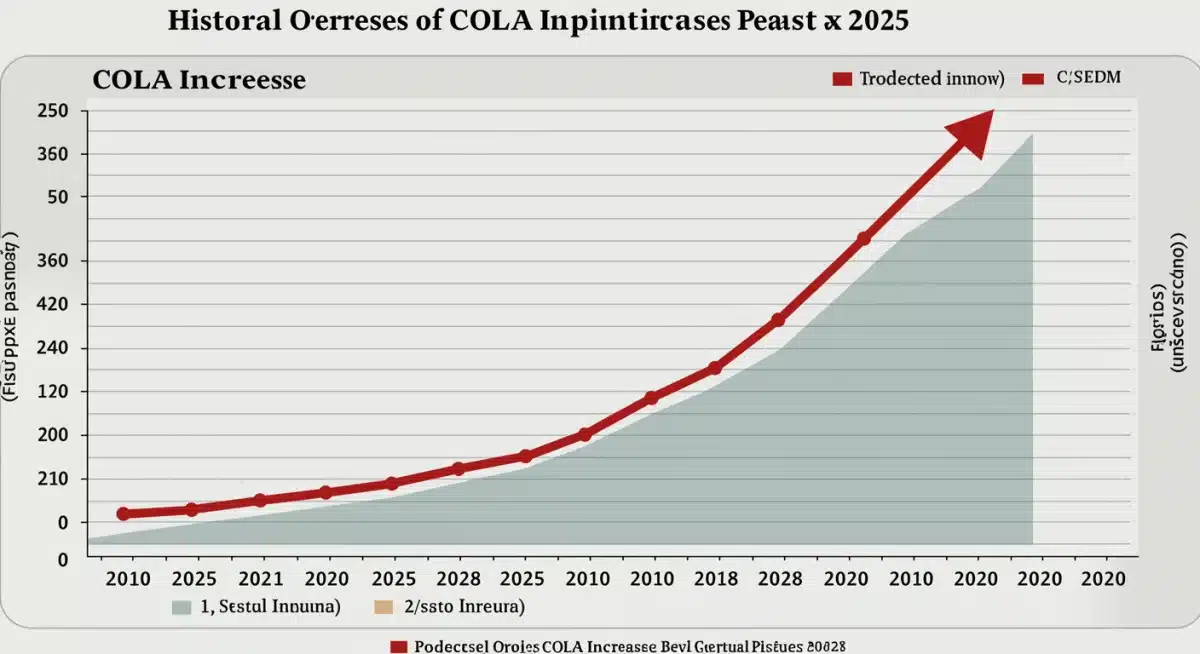
Looking back at historical COLA trends provides valuable context for understanding the projected 2025 COLA increase. Over the years, COLA percentages have varied widely, reflecting different economic climates and inflationary pressures.
In recent history, there have been periods of significant increases, particularly during times of high inflation, as well as years with very modest or no increases. These fluctuations highlight the dynamic nature of the economy and its direct influence on Social Security benefits.
Analyzing Past COLA Adjustments
A review of past COLA figures reveals patterns and helps in forecasting future adjustments. For instance, the substantial COLA increases in the early 1980s were a response to rampant inflation, while more recent years have seen more moderate adjustments.
- Volatility in the 1970s and 80s: These decades saw some of the highest COLA percentages due to high inflation.
- Periods of Low Inflation: In contrast, years with low inflation resulted in minimal or zero COLA adjustments, leading to concerns about fixed incomes.
- Recent Significant Increases: The past few years have seen higher COLAs as the economy grappled with post-pandemic inflation.
The future outlook for COLA largely depends on global and domestic economic conditions. While inflation is expected to moderate, ongoing geopolitical events and supply chain issues could still exert upward pressure on prices, making future COLAs a critical component of beneficiary financial stability.
Beyond the COLA: Other Factors Affecting Social Security Benefits
While the 2025 COLA increase is a significant factor, it’s important for beneficiaries to recognize that other elements can also influence their Social Security payments. These include Medicare premiums, income taxes on benefits, and the earnings test for those still working.
Understanding these additional factors provides a comprehensive view of net Social Security income and helps in more accurate financial planning. It’s not just about the gross increase, but also about what remains after various deductions and considerations.
Key Considerations for Beneficiaries
Being aware of these additional influences allows beneficiaries to anticipate potential changes to their net benefits and plan accordingly. Proactive management of these factors can help optimize overall financial outcomes.
- Medicare Part B Premiums: These premiums are often deducted directly from Social Security benefits. An increase in Medicare premiums can offset a portion of the COLA.
- Income Taxation of Benefits: Depending on your total income, a portion of your Social Security benefits may be subject to federal income tax. Some states also tax Social Security benefits.
- Earnings Test: If you are below full retirement age and continue to work while receiving benefits, your benefits may be reduced if your earnings exceed certain limits.
- Spousal and Survivor Benefits: The COLA also applies to spousal and survivor benefits, ensuring these crucial payments keep pace with inflation.
Considering all these factors alongside the 2025 COLA increase is essential for beneficiaries to gain a clear picture of their financial standing and make informed decisions about their future. Social Security is a complex system, and a holistic understanding is key.
| Key Aspect | Description |
|---|---|
| COLA Purpose | Adjusts Social Security benefits to counter inflation, preserving beneficiaries’ purchasing power. |
| Calculation Basis | Determined by changes in the Consumer Price Index for Urban Wage Earners and Clerical Workers (CPI-W). |
| Beneficiary Impact | Directly affects monthly income for 69 million retirees, disabled individuals, and survivors. |
| Financial Planning | Requires beneficiaries to re-evaluate budgets and consider other factors like Medicare premiums and taxes. |
Frequently Asked Questions About the 2025 COLA Increase
The official 2025 COLA increase is typically announced by the Social Security Administration in October, following the release of the Consumer Price Index for Urban Wage Earners and Clerical Workers (CPI-W) data for the third quarter (July, August, September).
Medicare Part B premiums are often deducted directly from Social Security benefits. While COLA increases your gross benefit, any rise in Medicare premiums could offset a portion of that increase, affecting your net monthly payment. It’s crucial to factor both into your budget.
No, by law, Social Security benefits cannot decrease due to a COLA. If the CPI-W shows no increase or even a decline, there will be no COLA for that year, and benefits will remain the same as the previous year, ensuring your payments do not go down.
The 69 million beneficiaries include a broad range of individuals: retired workers, disabled workers, and survivors (such as spouses and children of deceased workers). All these groups receive Social Security payments that are adjusted annually by the COLA.
Inflation is the primary driver of the COLA. The Social Security Administration uses the CPI-W to measure how much prices for everyday goods and services have increased. A higher rate of inflation generally translates to a larger COLA, aiming to maintain beneficiaries’ purchasing power.
Conclusion
The anticipated 2025 COLA increase represents a critical adjustment for 69 million Social Security beneficiaries, aiming to safeguard their financial stability against the persistent pressures of inflation. While the exact percentage will be confirmed later in the year, its impact will be felt across various demographics, from retirees to disabled individuals and survivors. Understanding how COLA is calculated, its historical context, and other influencing factors such as Medicare premiums and taxes, empowers beneficiaries to make informed financial decisions. This annual adjustment underscores the enduring importance of Social Security as a cornerstone of economic security for millions of Americans, ensuring that their benefits continue to support a dignified standard of living.